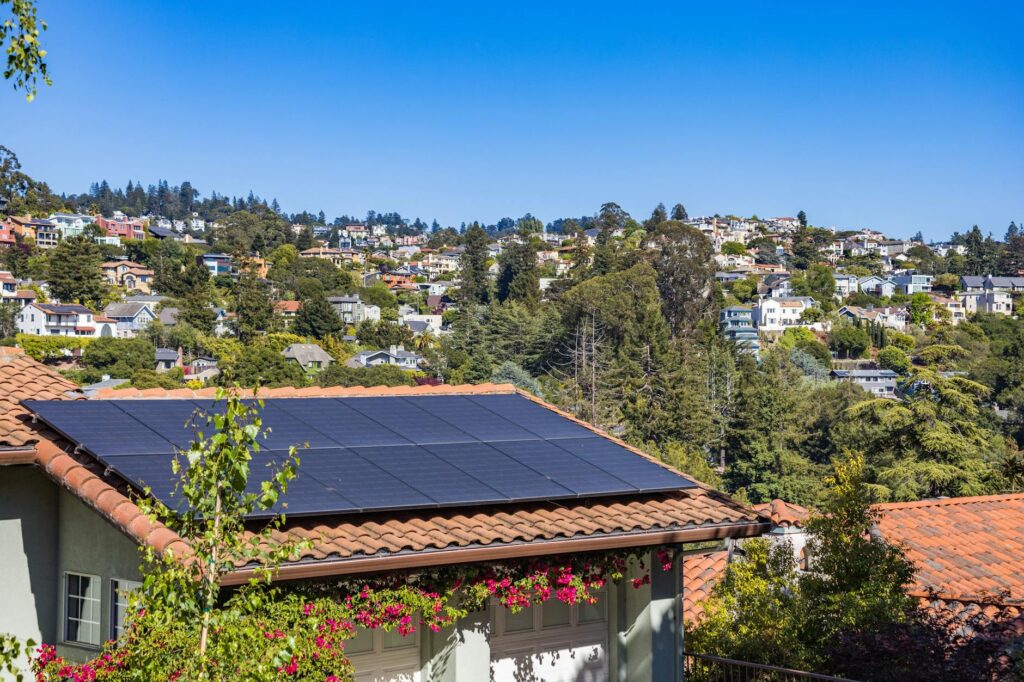
Installing solar panels is one of the most significant home improvement investments you can make, but understanding home solar cost upfront helps you make an informed decision. Solar technology has become increasingly affordable over the past decade, with the average residential solar system now costing between $15,000 and $25,000 before incentives. This comprehensive guide breaks down every factor that influences your solar installation price, helps you understand what you’re paying for, and shows you how much you can realistically save over time.
What Is the Average Home Solar Cost?
The total cost of a home solar installation depends on system size, location, roof condition, and local labor rates. Most homeowners install systems between 5 and 10 kilowatts (kW), which typically costs $2.50 to $3.50 per watt after accounting for all materials and labor. This means a 7 kW system—adequate for the average American household—would run approximately $17,500 to $24,500 before any tax credits or rebates.
However, thanks to the federal Investment Tax Credit (ITC), you can deduct 30 percent of your total installation cost from your federal income taxes. This immediately reduces a $20,000 system to an effective cost of $14,000 for many homeowners. Some states and local utilities offer additional rebates ranging from $500 to $5,000, further lowering your out-of-pocket expense.
Regional variations matter significantly. Installation costs are highest in California, Massachusetts, and New York due to permitting complexity and labor availability, while states like Texas, Florida, and North Carolina tend to have lower per-watt costs. Your specific roof size, shading patterns, and electrical system upgrades also affect the final price quote.
Breaking Down Home Solar Cost Components
Understanding where your solar investment goes helps you evaluate quotes fairly. Solar panels themselves account for roughly 25 to 30 percent of your total system cost. A high-efficiency panel from a premium manufacturer like SunPower or LG might cost more upfront but offers better long-term performance and durability guarantees of 25 to 30 years.
The inverter, which converts DC electricity from panels into usable AC electricity for your home, represents another 10 to 15 percent of costs. String inverters are the most affordable option at $1,500 to $3,000, while microinverters add $200 to $400 per panel but offer better shade tolerance and monitoring capabilities.
Installation labor typically constitutes 20 to 30 percent of your bill. This includes roofing work, electrical connections, permits, inspections, and system testing. Balance-of-system components—racking, wiring, disconnects, and monitoring equipment—account for 10 to 20 percent. Finally, soft costs like permitting fees, engineer stamps, and company profit margins make up the remaining 15 to 25 percent of your total home solar cost.
Financing Options Impact Your Real Cost
The way you pay for solar dramatically affects the true cost of ownership. Cash purchases eliminate interest payments but require significant upfront capital. Solar loans let you borrow the full installation price and repay it monthly, typically with interest rates between 4 and 8 percent. A $20,000 loan at 6 percent over 10 years costs roughly $236 monthly, but your monthly electricity savings often exceed this amount.
Leases and Power Purchase Agreements (PPAs) require zero down payment, with monthly payments starting around $100 to $200. You avoid ownership responsibilities and maintenance costs, but you don’t claim the 30 percent federal tax credit. Leases typically lock in rates for 20 to 25 years, providing predictable costs as utility rates climb.
Home Equity Lines of Credit (HELOCs) offer another financing path with potentially lower interest rates tied to your creditworthiness. Many homeowners find that combining cash down payment with a solar loan creates the best balance between initial expense and monthly savings.
How Much Can You Save With Home Solar?
Most homeowners save between $10,000 and $30,000 over 25 years with residential solar, with some saving significantly more depending on local electricity rates and system size. The key metric is your kilowatt-hour rate—states like Hawaii, Massachusetts, and California with rates above 18 cents per kWh see faster payback periods than states with rates near 10 cents per kWh.
If your current electric bill is $120 monthly, a properly sized 7 kW system likely covers 80 to 90 percent of your consumption, slashing your bill to $15 to $25 monthly. Over 25 years, that’s $25,200 in avoided electricity costs. Accounting for 2 to 3 percent annual inflation in utility rates, your real savings grow significantly.
The payback period—how long until savings equal your initial investment—ranges from 6 to 12 years for most homeowners after accounting for tax credits and state incentives. After that point, you’re essentially generating free electricity. Solar panels degrade only 0.5 to 0.8 percent annually, so a 25-year-old system still produces 80 percent of its original output.
Home Improvement and Roof Considerations
Before committing to home solar cost, address any underlying roof issues. If your roof needs replacement within the next 5 to 10 years, consider reroofing first. Installing panels on a failing roof wastes money, and removing panels for reroofing adds $1,000 to $3,000 in unnecessary labor costs.
Roof orientation and pitch affect solar efficiency and installation cost. South-facing roofs at 30 to 40-degree angles are ideal, while east or west-facing roofs work but produce 15 to 25 percent less electricity. Steep roofs or those requiring structural reinforcement drive up labor expenses. Metal and asphalt composition roofs accommodate solar easily, while slate or cedar shakes complicate installation and may be incompatible.
Shading is critical. Even partial shade from trees or adjacent buildings during peak hours dramatically reduces annual output. A tree that shades 25 percent of your array might reduce production by 50 percent or more. Professional solar companies assess shading through satellite imagery and on-site evaluation before quoting your home solar cost.
Frequently Asked Questions
What is the average cost per watt for residential solar panels?
As of 2024, residential solar costs between $2.50 and $3.50 per watt installed. This translates to a 6 kW system costing roughly $15,000 to $21,000 before incentives. Regional variations, panel quality, and installer pricing models all influence the per-watt cost you receive.
Does the federal tax credit reduce home solar cost?
Yes, the 30 percent federal Investment Tax Credit significantly reduces your effective cost. A $20,000 system becomes $14,000 in actual out-of-pocket expense for most homeowners. This credit applies to the entire system cost and runs through 2032, then phases down to 22 percent in 2033 and 0 percent after 2034.
How long does it take to break even on a solar installation?
Most homeowners break even between 6 and 12 years after accounting for federal tax credits and energy savings. In high-electricity-cost states like California and Hawaii, payback occurs in 5 to 7 years. The exact timeframe depends on your current electricity rates, system size, and available incentives in your area.
Can I finance solar panels instead of paying cash?
Absolutely. Solar loans, leases, PPAs, and HELOCs all enable solar ownership without large upfront payments. Solar loans let you claim the 30 percent tax credit while spreading costs over 10 to 20 years. Leases require no money down but eliminate tax credit eligibility and long-term ownership benefits.
What factors most impact my home solar cost quote?
System size (measured in kilowatts), your local labor rates, roof complexity, permitting requirements, inverter type, and panel quality are the primary cost drivers. Shading, roof age, structural upgrades, and electrical panel capacity also influence your final price. Getting multiple quotes helps ensure you’re paying a fair rate.
Use Our Free Solar Savings Calculator
Understanding your specific home solar cost and potential savings requires a personalized analysis. Head to our free solar savings calculator at solarestimatorpro.com to input your address, electricity bill, and roof details. Our tool instantly provides estimated system size, installation cost, 30-year savings projections, federal tax credits you qualify for, and your payback timeline. No email required—just honest, data-driven estimates so you can make confident decisions about residential solar investment. Try our calculator today and see exactly how much you could save with solar.
Conclusion
Home solar cost has fallen 70 percent over the past decade, making residential solar accessible to millions of homeowners. While a typical installation ranges from $15,000 to $25,000, the 30 percent federal tax credit, state rebates, and financing options bring that cost down significantly. With average savings between $10,000 and $30,000 over 25 years and payback periods of 6 to 12 years, solar represents a smart long-term investment in energy independence and home value. Take time to understand what you’re paying for, compare quotes from multiple installers, and explore financing options that match your financial situation. The sooner you start, the sooner you begin saving.
- Kill A Watt Power Meter — Helps homeowners measure current energy consumption before solar installation to establish baseline usage and potential savings
- Solar Pathway Lights Set — Complements solar investment by introducing readers to solar technology at smaller scale; entry-level solar product for those new to the technology
- Home Energy Audit Thermal Camera — Identifies energy inefficiencies and heat loss in homes, helping readers maximize ROI of their solar investment before installation
Related: How Much Do Solar Panels Cost? A 2024 Guide to Pricing, Factors & Savings
Related: How Much Do Solar Panels Cost? A 2024 Guide to Pricing and Savings
Related: Solar Panel Cost: The Complete 2024 Guide to Understanding Pricing and Savings