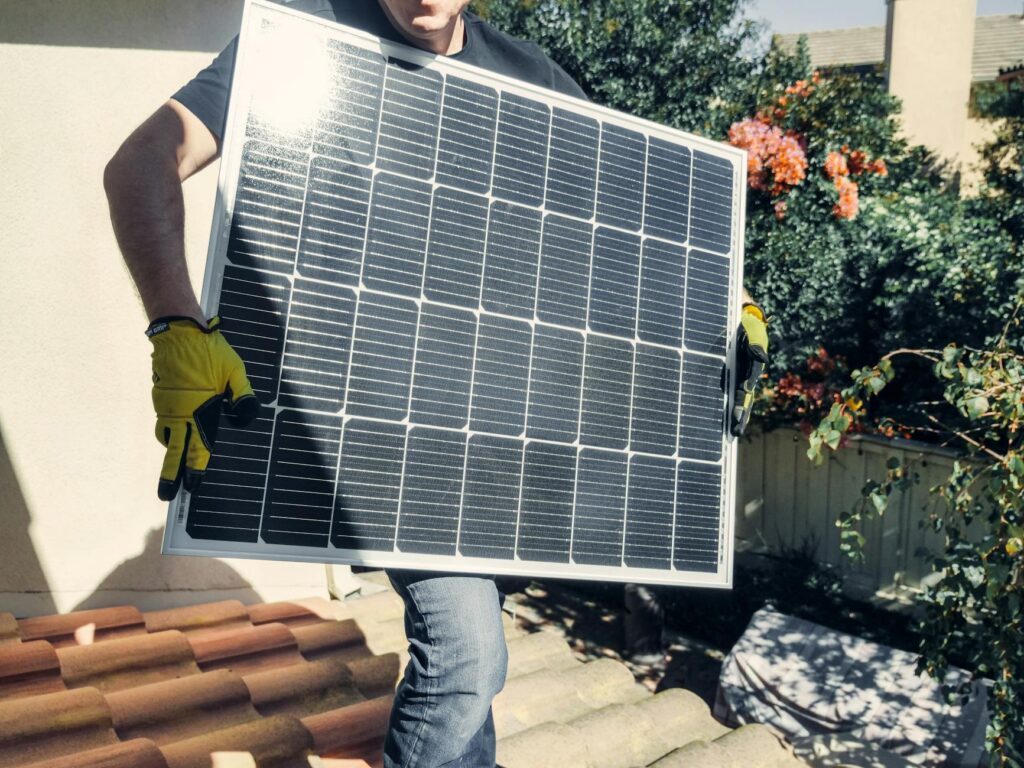
Solar Panel Cost: The Complete 2024 Guide to Understanding Pricing and Savings
Installing solar panels represents one of the largest home energy investments you’ll make, but understanding solar panel costs upfront helps you make an informed decision. The average residential solar panel system in the United States costs between $15,000 and $25,000 before incentives, though this figure varies significantly based on your location, roof size, energy consumption, and the specific equipment you choose. This comprehensive guide walks you through every factor that influences solar panel pricing and shows you how to estimate realistic savings for your home.
What Is the Average Cost of Solar Panels?
The total cost of a residential solar panel system typically ranges from $2.50 to $3.50 per watt after accounting for labor, materials, and installation. For a standard 6-kilowatt (kW) system—suitable for an average American household—you’re looking at roughly $15,000 to $21,000 before the federal Investment Tax Credit (ITC). The ITC currently allows you to deduct 30 percent of your total installation costs from your federal income taxes, potentially reducing your net cost to between $10,500 and $14,700.
System size matters tremendously. A smaller 4 kW system might cost $10,000 to $14,000, while a larger 8 kW system could run $20,000 to $28,000. The per-watt cost often decreases slightly for larger installations due to economies of scale in labor and equipment. Your local electricity rates and climate also influence what size system makes sense for your home, as does your current energy usage.
Factors That Drive Solar Panel Installation Costs
Geographic location is one of the most significant cost drivers. Installation labor rates vary dramatically between urban areas and rural regions, and between states with mature solar markets and those just beginning solar adoption. California, Florida, and Texas tend to have competitive pricing due to high installer density, while some rural areas face premium costs simply because fewer installers operate there.
Roof condition and complexity affect labor costs substantially. A newer roof with simple architecture costs less to equip with solar panels than an older roof requiring repairs before installation or a complex roofline with multiple angles and obstacles. Replacing asphalt shingles before solar installation might add $3,000 to $8,000 to your project cost.
Equipment quality creates significant price variations. Budget solar panels from lesser-known manufacturers might cost $0.40 to $0.60 per watt, while premium brands like SunPower command $0.75 to $1.00 per watt. Premium inverters and monitoring systems similarly affect overall pricing. Higher efficiency panels produce more electricity in the same space, which can reduce the number of panels needed.
Permitting and interconnection costs vary by jurisdiction from under $500 to $2,000 or more. Some municipalities streamline this process while others require extensive documentation and inspections. Your utility company’s interconnection agreement fees also factor in here.
Your electrical panel and upgrades might require attention. If your home’s electrical panel is outdated or lacks capacity, upgrading it before solar installation could cost $1,000 to $3,000 additional.
Breaking Down the Cost Components of a Solar Installation
A typical residential solar installation breaks down into several distinct cost categories. Solar panels themselves usually represent 25 to 35 percent of the total system cost. For a $20,000 installation, expect to spend $5,000 to $7,000 on the actual panels.
The inverter—the device that converts DC electricity from panels into usable AC electricity—typically costs $2,000 to $4,000 depending on whether you choose a string inverter, microinverters, or a hybrid system with battery capability. Installation labor usually accounts for 20 to 25 percent of total costs, making it $4,000 to $5,000 for an average system.
Mounting hardware, wiring, disconnects, and electrical components add up to roughly 15 to 20 percent. Permits, inspections, and interconnection paperwork typically consume $500 to $2,000. Finally, company profit margins and overhead usually represent 10 to 15 percent of the final price.
Federal and Local Incentives That Reduce Solar Panel Costs
The federal Investment Tax Credit remains the most substantial incentive, allowing homeowners to claim 30 percent of installation costs as a tax credit through 2032. This means a $20,000 system effectively costs only $14,000 after tax credits. You don’t need to own your home outright or have paid it off—the credit applies to financed installations too.
Many states offer additional rebates and credits. New York provides state tax credits up to $5,000. California offers various local rebates through utility companies. Some states exempt solar equipment from sales tax, saving you hundreds of dollars immediately. Check your state’s database to identify all available incentives.
Utility rebates and performance incentives vary widely. Some utilities offer upfront rebates of $1,000 to $3,000, while others provide ongoing credits on your electricity bills for excess power you send to the grid. Solar Renewable Energy Credits (SRECs) in participating states allow you to earn money by selling credits representing the environmental benefits of your system’s generation.
Property tax exemptions in many states ensure that adding a solar system doesn’t increase your property tax bill. This exemption might save you $200 to $500 annually depending on your home’s value and local tax rates.
Financing Options Impact Your True Solar Panel Cost
How you pay dramatically affects the total cost over time. A cash purchase means you pay the full upfront amount but own the system outright, receive all incentives immediately, and benefit from 25 years of free electricity generation. You also qualify for all tax credits and incentive programs.
Solar loans let you finance the system with little or nothing down, typically at 4 to 8 percent interest over 5 to 20 years. You own the system immediately and claim all incentives, but you’ll pay interest charges totaling thousands of dollars. A $15,000 loan at 6 percent over 10 years costs about $18,000 total.
Leases and Power Purchase Agreements (PPAs) require minimal upfront costs—sometimes just $500 to $2,000—but you pay for electricity generated over 20 to 25 years at a fixed or slightly escalating rate. You don’t own the system, so you can’t claim tax credits, but you typically enjoy immediate electricity savings since the PPA rate is lower than your current utility rate.
Home Equity Lines of Credit (HELOCs) offer potentially lower interest rates than solar-specific loans if you have equity in your home. This approach works well if you plan to stay in your home long-term and can handle the larger monthly payment.
Frequently Asked Questions
How much will my solar panels save me annually?
Annual savings depend on your system size, local electricity rates, and sun exposure, but average between $1,000 and $3,500 yearly. A homeowner in Arizona with a 6 kW system might save $2,500 annually, while someone in Washington state with the same system might save $1,200. Most systems pay for themselves in 6 to 12 years before delivering decades of free electricity.
Are solar panel costs the same everywhere in the United States?
No, costs vary significantly by location. Sunbelt states with mature solar markets offer more competitive pricing, while rural areas and states with less solar adoption typically charge more per watt. Labor costs, permitting complexity, and local competition all influence final pricing.
What size solar system do I need and what will it cost?
Your ideal system size matches your annual electricity consumption and available roof space. Most homes use 4 to 8 kW systems. Calculate your usage from past utility bills: if you use 10,000 kWh annually, you might need a 6 to 7 kW system costing roughly $15,000 to $22,000 before incentives. A solar professional can assess your specific needs accurately.
Do solar panel costs include batteries for energy storage?
No, most quoted prices are for grid-tied systems without batteries. Adding battery storage for energy independence costs $8,000 to $15,000 additional for a 10 to 15 kWh battery. Many homeowners skip batteries initially, keeping costs lower, and add them later if needed.
Is financing available for people with lower credit scores?
Yes, though terms may be less favorable. Some specialized solar lenders work with borrowers having credit scores as low as 600, though you may face higher interest rates. Leases and PPAs often require less rigorous credit approval than traditional loans, making them accessible to more homeowners.
Use Our Free Solar Savings Calculator
Understanding solar panel costs requires analyzing your specific situation, not relying on national averages. Head to solarestimatorpro.com and use our free solar savings calculator to get personalized cost estimates and projected savings for your home. Enter your address, roof characteristics, and current electricity bill to receive detailed projections showing your total system cost, savings after incentives, annual electricity savings in dollars, break-even timeline, and 25-year net savings. Our calculator accounts for your local electricity rates, available incentives in your region, sun exposure patterns, and seasonal variations to deliver the most accurate estimate possible. Start your calculation today and discover exactly what solar energy costs and saves for your unique situation.
Conclusion
Solar panel costs have dropped dramatically over the past decade, making residential solar installation more accessible than ever. While average costs range from $15,000 to $25,000 before incentives, federal tax credits reduce your true cost by 30 percent, and many homeowners see complete payback within 8 to 12 years. Your actual cost depends on your location, system size, equipment quality, and chosen financing method. By understanding these factors and exploring available incentives, you can make a confident
- Solar Panel Installation Toolkit — Homeowners researching solar costs often need tools for maintenance and monitoring after installation
- Solar Power Bank & Portable Charger — Complements solar energy education with practical solar products that demonstrate technology benefits
- Home Energy Monitor — Helps readers track energy consumption and calculate ROI on solar investments discussed in the guide