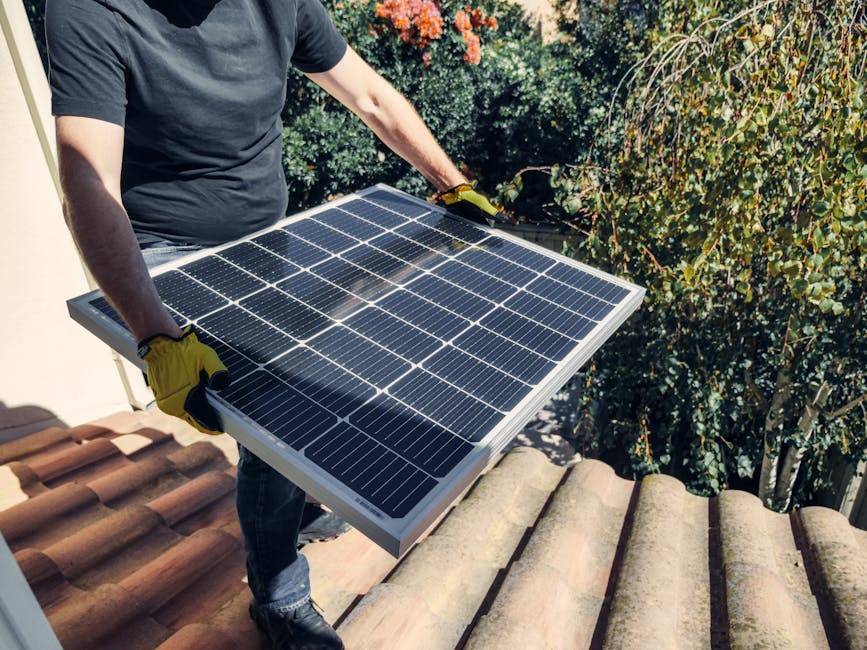
Renters can access solar power through portable solar panels, community solar programs, solar leasing agreements, or by negotiating with landlords for roof-mounted systems. Options vary by location, lease terms, and available sunlight exposure.
Can Renters Use Solar Power?
The short answer is yes—but the approach differs significantly from homeownership. While traditional rooftop solar installations require permanent property modifications, renters have several viable pathways to harness solar energy without violating lease agreements or losing their security deposits.
The key is understanding which renter-friendly solar options align with your living situation, financial goals, and local regulations. Some solutions require minimal landlord involvement, while others demand active negotiation and written permission. The good news? According to the U.S. Department of Energy’s Solar Energy Technologies Office, the solar industry has expanded significantly to accommodate renters through innovative programs and portable technology.
Portable Solar Panel Systems for Renters
Portable solar panels represent the most accessible entry point for renter-friendly solar power. These systems generate electricity without permanent roof installation, making them ideal for apartments, condos, and leased homes.
What is the cheapest solar option for renters?
Portable solar panel kits typically start at $300–$1,000 for basic systems and scale up to $3,000–$5,000 for more robust setups. These systems consist of solar panels mounted on lightweight frames, portable battery storage, and inverters that convert DC power to household AC current.
The advantage? Complete portability. When you move, your solar investment moves with you. Monthly electricity savings range from $10–$50 depending on system size, sunlight exposure, and your local utility rates. Because installation involves no drilling, roof penetration, or structural modifications, landlords rarely object.
Popular portable options include:
- Balcony-mounted panel systems (100–400 watts)
- Ground-level ground mounts for patios or yards
- Window-mounted flexible panels
- Foldable travel solar kits for temporary power
The trade-off? Limited capacity. A 400-watt portable system typically covers 5–15% of average renter electricity use, not a complete replacement.
Community Solar Programs and Shared Solar
Community solar programs enable renters to subscribe to a shared solar installation without owning equipment or requiring roof access. Local solar farms or building-mounted arrays generate electricity that flows through the grid to participating subscribers.
How do community solar programs work for renters?
You enroll in a program serving your address, pay a subscription fee (typically $25–$60 monthly), and receive credits on your electricity bill proportional to your share of the solar farm’s output. No equipment, installation, or landlord approval needed.
Community solar programs operate in 42+ states and Washington, D.C. Availability varies by zip code. Benefits include:
- No upfront costs for equipment or installation
- Immediate savings through bill credits (10–25% reduction)
- Zero maintenance—the solar company manages everything
- Portable subscriptions—you can often transfer to a new address within the service area
The limitation? You can’t benefit from federal investment tax credits or state rebates since you don’t own the equipment. Additionally, not all zip codes offer programs yet.
Solar Leasing and Third-Party Ownership
Solar leasing transfers equipment ownership and installation responsibility to a third party. The solar company installs panels on your rental property (with landlord permission), maintains the system, and you pay a fixed monthly lease payment.
Key advantages:
- No upfront installation costs
- Predictable monthly payments (typically $75–$150)
- The company assumes maintenance and repair liability
- Systems often include battery backup for outages
Critical requirement: Written landlord consent. The solar company must execute an agreement with the property owner. Some landlords welcome systems because they increase property value; others decline due to roof modification concerns or residual liability.
Lease terms typically span 20–25 years. When you move, you either transfer the lease (if the new tenant agrees) or break the contract (incurring early termination fees of $2,000–$5,000).
Working with Your Landlord on Solar Installation
Before approaching your landlord, gather documentation demonstrating the system’s benefits and low liability profile:
- Roof condition assessment proving structural stability
- Insurance information showing the solar company carries liability coverage
- Warranty details covering roof restoration upon removal
- Proof that systems increase property value (typically 3–4%)
Present the proposal in writing. Address concerns about aesthetics, structural integrity, and residual liability. Propose a formal agreement specifying installation timelines, maintenance responsibilities, and removal procedures.
Many landlords appreciate solar because it:
- Reduces tenant complaints about energy costs
- Improves property marketability for future tenants
- Generates additional revenue through state incentive programs
- Increases assessed property value
Document everything in writing—never proceed with installation without explicit landlord approval in a signed amendment to your lease.
Calculating Solar Savings as a Renter
Your actual savings depend on five variables: system capacity, sunlight exposure, local electricity rates, federal/state incentives available to you, and your current energy consumption.
A typical renter in the U.S. pays $120–$150 monthly for electricity. A 2-kilowatt portable or leased system reducing consumption by 20% saves $300–$360 annually. Over 10 years, that totals $3,000–$3,600 in savings—often exceeding equipment costs.
However, the exact payback period requires precise local data. Use the Solar Cost and Savings Calculator to input your address, current electric bill, and system preferences to generate personalized projections including:
- Estimated annual energy production (kWh)
- Year-by-year savings breakdown
- Total 20-year savings (accounting for electricity rate increases)
- Simple payback period in years
Renters should also check whether their area offers community solar credits, which often provide faster ROI than portable systems.
Comparing Renter Solar Options
Each renter solar solution trades off upfront cost, installation complexity, portability, and savings potential:
Related: renter-friendly solar options
Related: solar lease vs loan vs cash
Related: solar panel lifespan and durability
Related: complete solar cost guide
Related: maximize solar energy savings guide
Related: community solar programs
Related: time-of-use rate optimization
Related: maximize your solar energy savings
Related: maximize solar energy savings guide
Related: complete guide to solar pricing
Related: Illinois solar investment laws
- Portable panels: Most affordable ($300–$1,500), zero landlord approval needed, but modest savings (5–15% of consumption)
- Community solar: No equipment ownership, immediate bill credits (10–25%), but limited availability by location
- Solar leasing: Professional installation, significant savings (20–40%), but requires landlord cooperation and long-term commitment
- Landlord negotiation: Maximum savings potential, but highest friction and risk of rejection
- Portable Solar Panel Kit (200W-400W) — Directly addresses the main topic of renter-friendly solar options; portable panels are highlighted as a key solution for renters who cannot modify their rental property.
- Solar Power Bank / Portable Battery Storage — Complements portable solar solutions by providing energy storage; essential for renters using temporary solar setups to maximize utility.
- Renters Insurance with Solar Equipment Coverage — Practical complementary product for renters setting up solar systems; protects their portable equipment investment and addresses landlord concerns about property modifications.