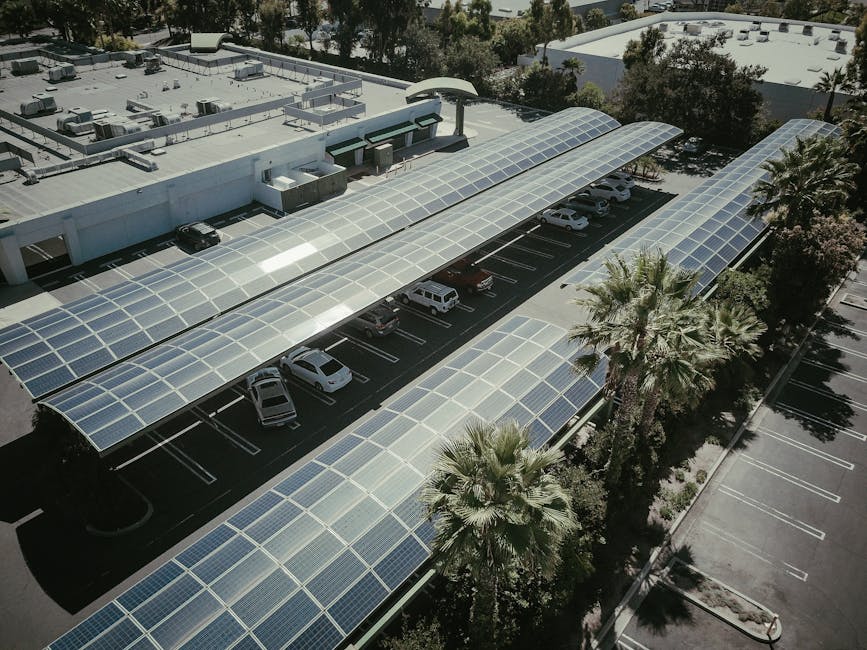
Solar canopies and carports are ground-mounted or structure-integrated photovoltaic systems that generate electricity while providing shade or coverage. Carports typically cost $15,000-$40,000 installed, while canopies range from $20,000-$50,000, offering dual functionality compared to traditional rooftop installations.
What Are Solar Canopies and Carports?
Solar canopies and carports represent a growing category of alternative solar installation methods that serve dual purposes. Unlike traditional rooftop systems, these structures combine energy generation with practical shade or shelter functionality.
A solar carport functions as a covered parking structure where photovoltaic panels form the roof. This design protects your vehicle from weather while generating clean electricity. A solar canopy operates similarly but typically covers larger areas—patios, walkways, or parking lots—without the vehicular storage function.
Both systems qualify for the same federal Investment Tax Credit (ITC) that applies to rooftop installations. According to the U.S. Department of Energy’s solar program, these mounting configurations can achieve comparable energy production to roof-mounted systems when positioned correctly.
Solar Canopy Installation Options and Costs
Solar canopy pricing varies based on size, materials, and local installation complexity. Most residential canopies range from $20,000 to $50,000 before incentives.
What is the difference between a solar canopy and a solar carport?
The primary difference lies in structural design and intended use. Solar carports incorporate dual-post or single-post designs optimized for vehicle clearance—typically 7 to 8 feet high. Solar canopies feature broader support structures and can achieve greater heights for pedestrian areas. Carports are engineered for vehicle weight distribution, while canopies prioritize open space beneath.
Solar canopy pricing tends higher per-watt than carports because canopy structures often require more sophisticated engineering for load distribution and aesthetic integration. A 5 kW canopy averages $12,000-$15,000 before incentives, while equivalent carport systems cost $8,000-$10,000 per kW.
How much does a solar carport installation cost?
A typical residential solar carport installation costs $15,000 to $40,000 installed, depending on system size and location-specific factors. This breaks down as follows:
- Small carport (3-4 kW): $12,000-$18,000
- Medium carport (5-6 kW): $18,000-$28,000
- Large carport (7-10 kW): $28,000-$40,000
Permitting and structural engineering add $1,000-$3,000 to total costs. Your local utility rates and available incentives significantly impact actual payback periods, which is why calculating ROI with your specific data matters more than national averages.
Solar Carport Installation Options and Costs
Solar carport installation options have expanded dramatically. Installers now offer single-post designs, dual-post structures, and integrated systems that charge electric vehicles simultaneously.
Single-post carports provide maximum ground clearance and architectural flexibility. Dual-post designs offer enhanced structural stability and typically cost slightly less due to reduced engineering requirements. EV-integrated carports add $2,000-$5,000 but enable vehicle charging alongside electricity generation—potentially tripling your system’s utility value.
Permitting complexity varies by jurisdiction. Some areas treat carports as simple shade structures requiring minimal approval, while others classify them as buildings requiring full engineering review. This affects timeline and cost. Budget 6-12 weeks for permitting in most regions.
Installation timeframes typically span 2-4 weeks once permits clear. Your installer will assess soil conditions, local wind loads, and snow load requirements—all factors that influence final pricing. A solar cost calculator can help you account for these location-specific variables.
Solar Canopies vs. Carports vs. Rooftop Solar
Choosing between these three alternative solar installation methods requires analyzing your property constraints and financial goals.
Rooftop systems remain the most affordable option at $7,000-$12,000 per kW installed. They require no additional land use and integrate seamlessly with existing structures. However, they’re unsuitable if your roof faces north, has significant shading, or lacks sufficient structural integrity.
Solar carports offer superior value for homeowners with adequate parking space. They provide shade, protect vehicles, and generate electricity—three benefits for one investment. Cost-per-watt runs 10-15% higher than rooftops but lower than canopies.
Solar canopies serve specific niches: covering patios, walkways, or large commercial parking areas. They’re ideal for properties where roof-mounting isn’t feasible and where ground-level shade provides genuine value beyond electricity generation.
Are solar canopies worth the investment? This depends on your electricity costs and available alternatives. In high-utility-rate regions (California, Massachusetts, Hawaii), canopies break even in 6-9 years. In lower-rate areas, payback extends to 10-14 years. The dual functionality—parking protection or outdoor coverage—adds intangible value that financial calculations don’t capture.
How to Use the Calculator
Determining actual ROI requires comparing your local utility rates, roof orientation, and available incentive programs. Our solar payback calculator accounts for these variables automatically.
To calculate your carport or canopy ROI:
- Enter your monthly utility bills (12-month average recommended)
- Input your proposed system size (in kilowatts)
- Select your installation type: rooftop, carport, or canopy
- The calculator adjusts for production differences based on structure type
- View your break-even timeline and 25-year savings projection
This approach eliminates guesswork from the ROI calculation and accounts for regional differences in utility rates, sun exposure, and available rebates that dramatically impact actual payback periods.
Frequently Asked Questions
What permits do solar carports and canopies require?
Most jurisdictions require electrical permits (standard for all solar installations) and building permits treating carports/canopies as structures. Some areas classify ground-mounted systems as “accessory structures” requiring simplified review. Contact your local building department early—this step often adds 4-8 weeks to your timeline. Budget $500-$1,500 for permitting costs.
Can I add EV charging to my solar carport?
Yes. Most installers offer integrated Level 2 charging solutions that work with carport systems. Your solar production may generate 50-70% of typical EV charging needs, with grid electricity supplementing during evening hours or cloudy days. This integration adds functionality but increases system cost by roughly 15-20%.