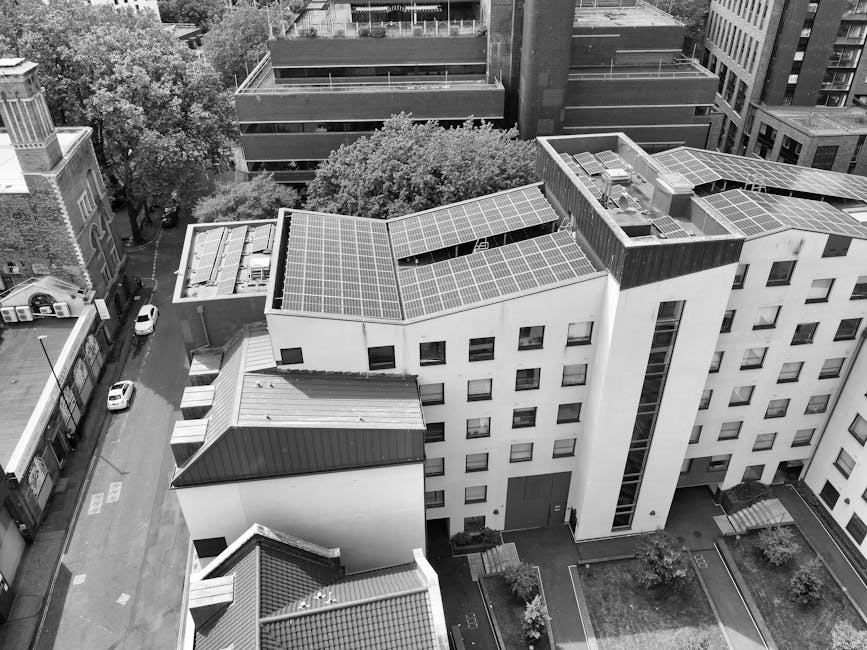
Commercial solar systems are larger-scale installations designed for businesses and industrial properties, typically ranging from 25kW to several megawatts, while residential systems serve single homes at 3-10kW capacity. Commercial systems offer greater economies of scale and higher ROI, whereas residential systems are more affordable upfront with faster payback periods.
System Size and Scale Differences
The most obvious distinction between commercial solar vs residential solar lies in system capacity. Residential solar systems typically range from 3kW to 10kW, sized to match a household’s annual electricity consumption. Most homeowners use between 800 to 1,200 kWh per month, making smaller systems sufficient for their needs.
Commercial solar installations start at 25kW and scale upward dramatically. A small commercial property might install 50kW, while larger facilities often deploy 100kW to several megawatts. This size difference directly impacts material costs, labor requirements, and structural considerations.
The scale also influences roof space requirements. A residential system typically requires 15-25 rooftop square feet per kilowatt, while commercial installations often utilize significantly more roof area or ground-mounted arrays across parking lots and open land.
What is the difference between commercial and residential solar panels?
While both use photovoltaic technology, commercial panels are engineered for different performance metrics. Commercial panels often feature higher wattage ratings (400-600W per panel) compared to residential panels (300-400W). Commercial installations prioritize efficiency and durability for continuous operation, often using industrial-grade inverters rated for decades of heavy use.
Residential panels emphasize balance between cost and performance. They’re designed for typical home usage patterns and come with standardized warranties of 25 years for equipment and 10 years for workmanship.
Cost Comparison: Commercial vs Residential Solar
Understanding commercial solar panel costs versus residential pricing reveals important economics. According to the U.S. Department of Energy Solar Energy Technologies Office, commercial solar costs have declined significantly, now averaging $1.50-$2.50 per watt after accounting for labor, equipment, and installation.
Residential solar system costs typically range from $2.50-$3.50 per watt, making them more expensive on a per-watt basis. However, this doesn’t mean commercial is always cheaper in absolute dollars. A 50kW commercial system might cost $75,000-$125,000, while a 7kW residential system costs $14,000-$24,500.
The per-watt advantage for commercial systems emerges from economies of scale. Larger projects spread fixed costs—like permitting, inspections, and engineering—across more kilowatts. Additionally, commercial installers often negotiate better material pricing due to volume purchasing.
Is commercial solar more cost-effective than residential solar?
Cost-effectiveness depends on your specific situation. Commercial solar offers lower per-watt costs and higher absolute energy production, making it more financially efficient for businesses. Residential solar provides faster payback periods due to lower upfront investment and available state and local incentives, making it more accessible for homeowners.
A commercial business with high electricity consumption may see a 15-20 year payback period, but over a 25-year panel lifespan, the total savings exceed residential installations by hundreds of thousands of dollars due to greater energy output.
Installation and Technical Requirements
Commercial and residential solar installation processes differ substantially in complexity and timeline. Residential installations typically take 1-3 days, requiring minimal structural modifications and standard electrical connections to the home’s panel box.
Commercial installations demand extensive planning and often take weeks to months. Large commercial systems require structural engineering assessments to verify roof or ground load capacity, especially for facilities not originally designed for solar. Electrical infrastructure upgrades may be necessary to accommodate the system’s output—including new transformer installations or utility interconnection modifications.
Permit requirements also escalate significantly. While residential permits typically involve straightforward municipal review, commercial projects often require utility company pre-approval, environmental impact assessments, and compliance with commercial building codes. This bureaucratic process adds time and cost but ensures safety and grid compatibility.
Roof condition and structural integrity matter equally for both systems, but commercial assessments are more rigorous. Engineers must evaluate wind load ratings, water drainage, and long-term material deterioration across much larger surface areas. Some commercial properties discover they need roof replacement before installing solar, adding substantial upfront costs.
Incentives and Tax Benefits by Type
Federal tax treatment now differs sharply between the two. The residential Clean Energy Credit (Section 25D) — the 30% credit homeowners claimed on a cash or loan purchase — expired on December 31, 2025 under the One Big Beautiful Bill Act. A homeowner who buys a residential system outright in 2026 receives no federal tax credit; only systems placed in service by the end of 2025 can still claim the 30% on a 2025 return. Commercial solar is treated differently: businesses can still claim the federal investment credit under Section 48E, though that credit is itself phasing down on near-term construction-start and placed-in-service deadlines — so commercial buyers should confirm current eligibility with their installer and a tax professional before counting on it.
Residential solar enjoys additional state and local incentives. Many states offer rebate programs, property tax exemptions, and sales tax waivers specifically for homeowners. These incentives significantly reduce residential system costs—often bringing effective payback periods below 7 years.
Commercial solar qualifies for accelerated depreciation through MACRS (Modified Accelerated Cost Recovery System), allowing businesses to deduct system costs rapidly across five years. This tax advantage appeals to profitable companies seeking to reduce tax liability, though it’s less beneficial for startups or nonprofits.
Many utility companies offer net metering programs for both residential and commercial customers, crediting excess solar energy fed back to the grid. However, commercial rates vary—some utilities provide reduced credits for commercial net metering, affecting long-term ROI calculations.
Maintenance and Lifespan Expectations
Both systems operate reliably for 25-30 years, but maintenance demands differ. Residential solar requires minimal upkeep—occasional panel cleaning and inverter monitoring. Most homeowners perform annual visual inspections and professional cleaning every 2-3 years.
Commercial systems demand more rigorous maintenance due to their size and complexity. Regular monitoring of multiple inverter units, combiner boxes, and safety equipment is essential. Commercial installations should include quarterly professional inspections, biannual cleaning schedules, and systematic tracking of performance data to identify degradation.
Larger commercial systems typically employ more sophisticated monitoring technology, allowing real-time performance tracking and automated fault detection. This proactive approach prevents minor issues from becoming major repairs, protecting the significant capital investment.
ROI Timeline and Payback Period
Residential solar typically achieves payback within 6-10 years, depending on local electricity rates and available incentives. Homeowners in high-rate states (California, Massachusetts, Hawaii) see faster payback than those in lower-rate regions.
Commercial payback periods extend to 12-20 years, appearing longer on the surface. However, the extended lifespan means commercial systems generate substantial savings in years 15-25 when residential owners face equipment replacement costs.
Our commercial solar ROI calculator helps businesses model long-term financial returns accounting for tax benefits, utility rate inflation, and performance degradation. For residential properties, our residential payback period calculator provides customized projections based on your specific electricity rates and local incentives.
How to Use the Calculator
Calculating accurate ROI requires understanding your local utility rates, available incentives, and system specifications. Our system cost estimator integrates current federal tax credits, state rebates, and utility-specific programs to project real financial outcomes.
For commercial properties, input your annual electricity consumption, peak demand charges, and facility location. The calculator accounts for accelerated depreciation, varying net metering credits, and long-term rate escalation. Residential users should enter their monthly utility bills, local electricity rates, and roof characteristics.