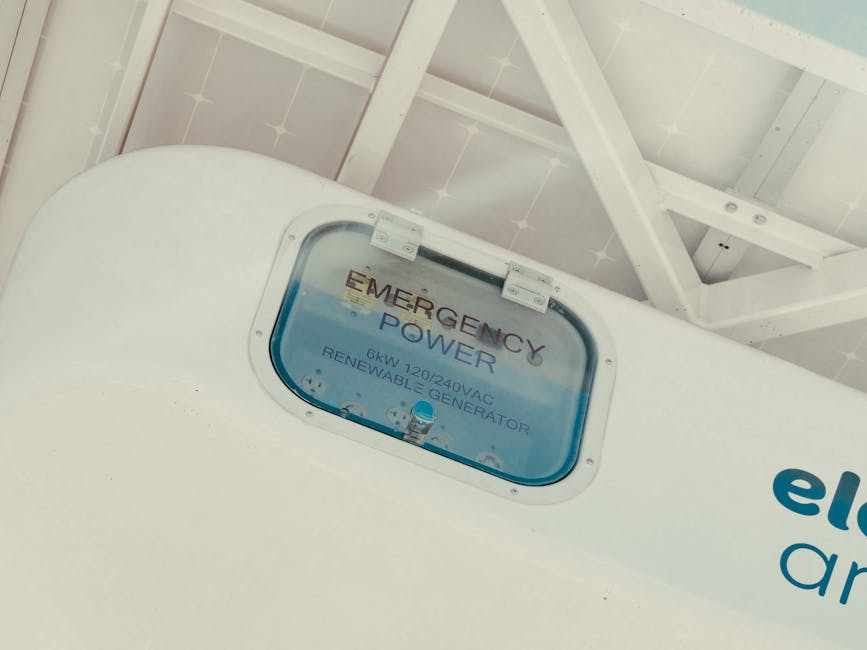
Solar battery backup systems typically cost $10,000–$20,000 installed, while whole-house generators run $7,000–$15,000. Batteries offer silent, zero-fuel operation; note the 30% federal tax credit ended for residential systems installed after December 31, 2025. Generators provide unlimited runtime but require fuel and maintenance. Your best choice depends on outage frequency, energy usage, and long-term cost goals.
Upfront Costs and Installation Breakdown
When comparing these two backup power options, the sticker price is just the starting point. Let’s break down what you’re actually paying for in 2026.
Solar Battery Systems
A single Tesla Powerwall 3 or Enphase IQ Battery 5P unit runs approximately $9,500–$12,000 before installation. Most homes requiring whole-house backup need two or more units, pushing costs to $18,000–$25,000 before incentives. Installation typically adds $1,500–$3,000 depending on your electrical panel configuration.
The critical offset: battery systems qualified for the federal Investment Tax Credit (ITC) at 30% through the end of 2025, but the residential credit ended for systems installed in 2026. According to the U.S. Department of Energy’s solar program, standalone battery storage systems now qualify for this credit even without a solar panel system — a major policy shift that dramatically changes the financial math.
With no federal credit in 2026 (the 30% ITC ended at the end of 2025), a $20,000 battery installation costs the full $20,000 out of pocket. Some states layer additional rebates on top, reducing costs further.
Whole-House Generator Systems
Standby generators powered by natural gas or propane range from $7,000–$15,000 installed for units sized between 20kW and 26kW — enough to run most homes comfortably. Propane models require tank installation ($1,000–$3,000 additional), while natural gas units connect directly to utility lines.
Generators do not qualify for the federal ITC. Some utility companies offer modest incentives for grid-stabilizing equipment, but these are rare and inconsistent. What generators lack in incentive eligibility, they partially recover through lower upfront costs.
To model your specific costs after tax credits and local rebates, try our solar tax credit savings calculator to see your personalized ITC benefit.
Long-Term Operating Costs and True 10-Year Expense
Upfront price tells only part of the story. The 10-year total cost of ownership is where these two technologies diverge significantly.
Battery Operating Costs
Solar batteries have virtually zero operating costs when paired with solar panels. Electricity from your panels charges the batteries for free. Without solar, you charge from the grid during off-peak hours, which still costs far less than generator fuel. Battery systems have no oil changes, no annual tune-ups, and no fuel storage requirements.
The primary long-term consideration is battery degradation. Most lithium iron phosphate (LFP) batteries carry 10-year warranties guaranteeing 70–80% capacity retention. Replacement costs after the warranty period currently run $8,000–$12,000 per unit, though prices are projected to fall substantially by the mid-2030s.
Generator Operating Costs
This is where generators become expensive over time. Annual maintenance — including oil changes, filter replacements, and professional inspections — runs $300–$600 per year. During actual outages, a 20kW natural gas generator consumes roughly 200 cubic feet of gas per hour at full load, or about 150 cubic feet at 50% load. At current average natural gas prices of approximately $1.20 per therm, a week-long outage can easily cost $200–$400 in fuel alone.
Over 10 years, cumulative maintenance and fuel costs for an average household using a generator for 50–100 hours annually total approximately $5,000–$8,000 — before accounting for any major repairs or component replacements.
10-Year True Cost Summary (Average Household):
- Battery system: $14,000 after ITC + $500 in minor costs = ~$14,500
- Generator: $10,000 installed + $7,000 operating costs = ~$17,000
The gap widens further if you pair batteries with solar, where daytime outages are handled entirely by free solar generation.
Performance, Reliability, and Environmental Factors
Power Capacity and Runtime
Generators win on raw, uninterrupted runtime. As long as fuel is available, a generator runs indefinitely — critical during extended multi-day outages from hurricanes or winter storms. A 22kW generator handles nearly any home electrical load simultaneously, including central air conditioning, electric ranges, and EV chargers.
Battery systems are capacity-limited. A single 13.5 kWh battery might power essential loads (refrigerator, lights, phone charging, medical devices) for 12–24 hours. Two units extend that, but without solar recharging, a week-long outage will deplete most residential battery setups. The solution — pairing batteries with solar — creates a genuinely resilient microgrid that recharges daily from the sun.
Environmental and Lifestyle Considerations
Batteries operate silently and produce zero emissions. Generators create noise pollution (65–75 dB at 23 feet) and emit carbon monoxide, requiring proper outdoor installation and clearance from windows. For urban or suburban homeowners with close neighbors, HOA restrictions, or air quality sensitivities, batteries are often the only practical choice.
According to energy.gov’s residential energy resources, battery storage adoption has grown over 300% since 2020, driven largely by wildfire-prone and hurricane-vulnerable regions where clean, silent backup power is essential.
Use our home battery backup sizing calculator to determine exactly how many kWh you need to cover your critical loads through a typical outage.
How to Use the Calculator to Compare Your Options
Every home has different energy demands, utility rates, and outage risk profiles. Our solar ROI and payback period calculator lets you input your average monthly electricity bill, local utility rate, estimated battery or generator cost, and applicable incentives to generate a side-by-side 10-year cost projection. Simply enter your ZIP code to pull local utility rates automatically, then toggle between battery and generator scenarios to see which delivers the better financial return for your specific situation.
Frequently Asked Questions
Does a solar battery qualify for the 30% federal tax credit in 2026?
No — not if you buy with cash or a loan. The 30% Residential Clean Energy Credit (§25D) expired for systems placed in service after December 31, 2025, so a standalone battery storage system installed in 2026 receives no federal tax credit regardless of size or whether it pairs with solar. State and local incentives may still apply, so a $25,000 system now nets $25,000 minus whatever your state offers. The one 2026 exception is a lease or PPA — the company that owns the system can still claim the federal commercial credit (§48E) and reflect part of it in your monthly payment, but that path winds down for projects placed in service after 2027.
Which system is better for week-long power outages?
For extended outages without solar, a generator wins on raw runtime. However, a battery system paired with solar panels can recharge daily from sunlight, making it equally viable for long outages while remaining fuel-free and silent. For outage-prone regions, a solar-plus-battery combination is often the most resilient long-term solution.