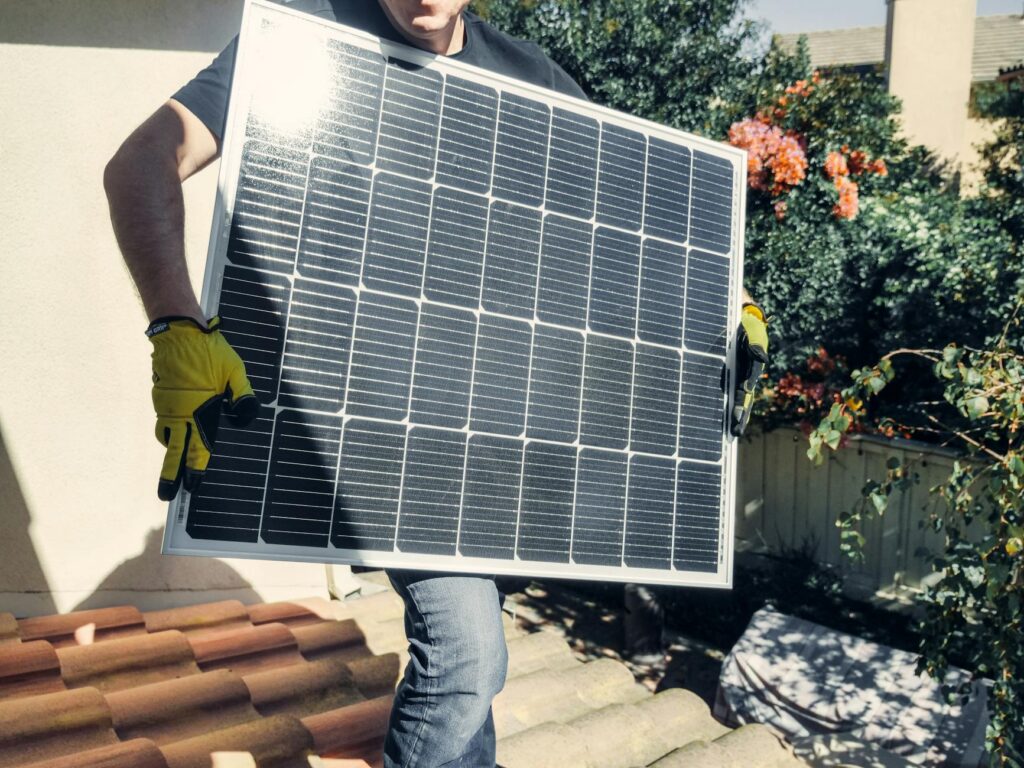
Adding solar to an existing home typically costs 15-25% more than installing it during new construction, primarily due to roof assessment, structural reinforcement, and electrical upgrades. New construction allows builders to integrate solar from the foundation up, optimizing placement and wiring efficiency. However, existing homeowners can start cutting their electricity bills immediately and may qualify for state and local incentives—making retrofitting a solid investment despite higher upfront costs.
Solar Installation on Existing Homes: What to Expect
Retrofitting solar onto an established home involves several unique considerations that new construction avoids. The average existing home installation takes 1-3 months from initial consultation to final activation, compared to 2-4 weeks for new construction integrated during the building phase.
Your roof’s age and condition are critical. If your roof is over 15 years old, most installers recommend replacement before solar installation to avoid removing panels in 10-15 years. Roof replacement adds $5,000-$15,000 to your project cost. According to data from the National Renewable Energy Laboratory (NREL), 23% of existing home solar projects require structural upgrades to support panel weight, with reinforcement costs ranging from $1,500-$4,000.
Electrical upgrades are another consideration. Homes with outdated electrical panels (pre-2000s) may need panel upgrades ($2,000-$3,500) to safely integrate inverters and disconnect switches. You’ll also need a new meter to track bidirectional power flow with net metering, typically covered by your utility at no cost.
Permitting timelines vary by municipality but average 2-6 weeks. Some areas have streamlined permitting that accelerates approval to 1-2 weeks. This directly impacts your project timeline and soft costs (labor during waiting periods).
Solar Integration in New Construction: Design Advantages
Building solar into new homes from day one offers significant advantages in cost efficiency and design optimization. Builders can strategically orient the home toward true south (in the Northern Hemisphere) and minimize shade from trees or neighboring structures—something impossible to change in existing homes.
New construction solar costs 30-40% less per watt than retrofits, averaging $2.50-$3.00 per watt after labor versus $3.50-$4.25 per watt for existing homes. This data comes from the U.S. Department of Energy’s 2023 Solar Installation Assessment report, which tracked 50,000+ residential projects.
Builders can integrate wiring during framing stages, eliminating expensive conduit installation and wall penetrations required in retrofits. They can also right-size the electrical panel for solar from the start rather than upgrading later. New construction homes frequently include battery-ready wiring ($800-$1,200 savings if added later) and dedicated space for future energy storage.
The federal picture changed in 2026. The residential Clean Energy Credit (Section 25D) — a 30% federal credit on owner-purchased systems — expired December 31, 2025 under the One Big Beautiful Bill Act. A homeowner buying solar outright in 2026, whether retrofitting an existing home or adding it to new construction, no longer receives that federal credit; only systems placed in service by the end of 2025 qualify, claimed on a 2025 return. Buyers can still pursue state and local incentives and, in some markets, third-party financing (a lease or PPA) where the provider claims the commercial Section 48E credit and reflects it in lower payments. New construction homes also face longer timelines—solar installation typically happens during final construction phases (months 8-12), whereas existing homeowners can begin saving within weeks of signing a contract.
Cost Comparison: Real Numbers for Your Decision
A typical 6 kW system tells the full story:
Existing Home Installation: $14,400-$17,100 (before incentives), broken down as:
- Equipment: $6,000-$7,500
- Labor & installation: $4,500-$6,000
- Permits & inspections: $1,200-$1,800
- Electrical upgrades (if needed): $2,000-$3,500
Net cost in 2026: $14,400-$17,100 — a cash or loan purchase no longer qualifies for the 30% federal credit (Section 25D expired December 31, 2025). State and local incentives, where available, may still reduce this.
New Construction (same system): $9,000-$11,400 (built into home price), with no immediate tax advantage unless the homeowner itemizes deductions (rare).
Without the former federal credit, payback now depends heavily on your local electricity rates and any state incentives rather than a federal subsidy — use the calculator below to model your own timeline. In high-rate markets, reduced electricity bills still make retrofitting a strong long-term investment, while a new construction buyer benefits mainly from the lower installed cost built into the home price.
Key Timeline Differences
Existing Home: Consultation (1 week) → Site assessment & design (2-3 weeks) → Permitting (2-6 weeks) → Installation (3-5 days) → Inspection & activation (1-2 weeks) = Total: 2-4 months
New Construction: Integrated during months 8-12 of build, with zero additional timeline impact since solar installation happens alongside final electrical work.
How to Use Our Solar Calculator to Compare Your Options
Understanding your home’s specific costs and savings requires accurate data about your location, roof space, and electricity usage. Use our solar cost and savings calculator to input your address, monthly electric bill, and roof orientation. The calculator instantly generates a customized estimate including system size, installation costs, available incentives, and 25-year savings projections—whether you’re retrofitting an existing home or evaluating solar for a new construction purchase.
Frequently Asked Questions
Is it cheaper to add solar before or after buying a home?
New construction is cheaper per watt ($2.50-$3.00 vs. $3.50-$4.25) and lets builders optimize orientation and wiring from the start. As of 2026 neither path qualifies for the old 30% federal residential credit — Section 25D expired December 31, 2025 — so the decision turns on per-watt cost, state and local incentives, and how solar is priced into the home. Retrofitting lets you start saving on electricity right away; new construction lowers the installed cost. Which wins depends on your local rates and incentives.
Can I add solar to my older roof, or do I need replacement?
Roofs under 15 years old typically support solar installation without replacement. Installers perform structural inspections (included in most free quotes) to verify load capacity. If your roof is nearing end-of-life, replacement before solar installation is recommended—it’s cheaper to replace a bare roof than to remove and reinstall panels. Budget $10,000-$15,000 for asphalt shingle roof replacement if needed alongside your solar project.
What’s the fastest timeline for existing home solar installation?
With expedited permitting and no structural upgrades required, some existing homes can go from signed contract to grid-connected in 6-8 weeks. However, the average is 2-4 months due to municipal permit processing (2-6 weeks alone). Municipalities with pre-approved solar permitting (California, Colorado, New York) consistently deliver faster timelines. Your installer can identify your local permitting speed during the initial consultation.