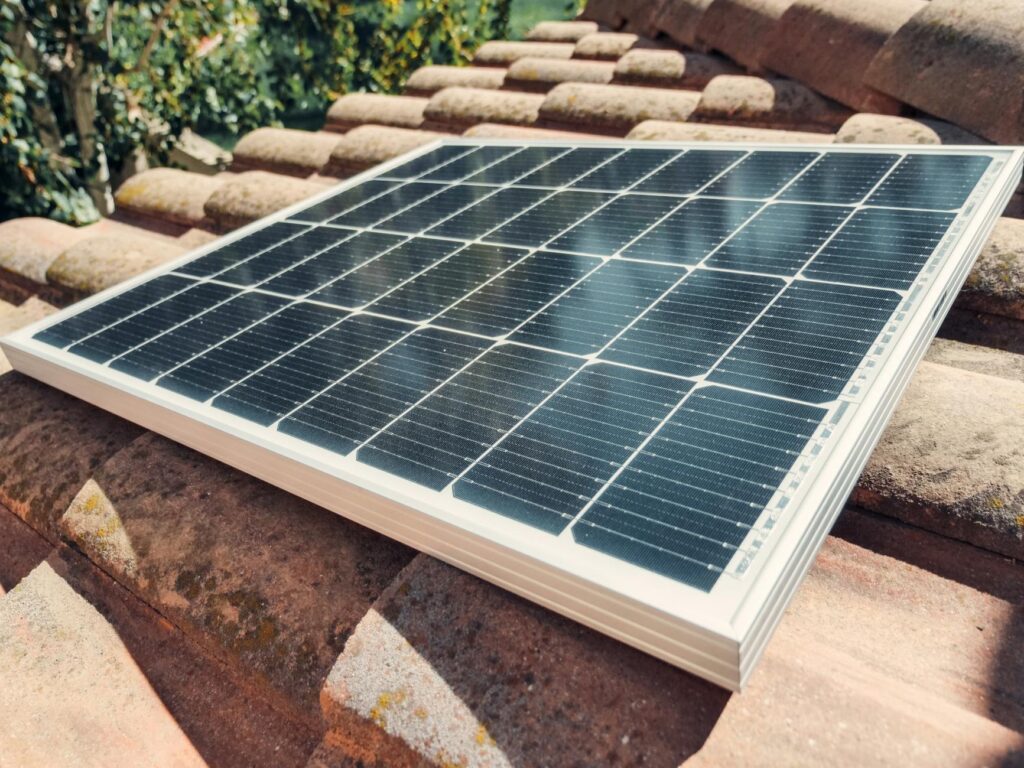
Monocrystalline and polycrystalline solar panels differ primarily in how silicon is processed, which affects efficiency, cost, and lifespan. Monocrystalline panels are more efficient and durable but cost more upfront, while polycrystalline panels offer a budget-friendly option with slightly lower efficiency. Understanding these differences helps you make an informed decision based on your roof space, budget, and long-term solar ROI.
What Are Monocrystalline Solar Panels?
Monocrystalline panels are made from a single, pure silicon crystal. During manufacturing, silicon is melted and formed into a single cylindrical ingot, which is then sliced into wafers. This process creates a uniform crystal structure throughout each cell, giving monocrystalline panels their distinctive dark appearance with slightly rounded corners.
The single-crystal structure allows electrons to move more freely through the material, resulting in higher electrical efficiency. Modern monocrystalline panels typically achieve efficiency ratings between 18% and 22%, with premium models reaching up to 24%. This means more power output per square foot, making them ideal for homeowners with limited roof space or those seeking maximum energy production.
Monocrystalline panels also perform better in low-light conditions and high temperatures compared to their polycrystalline counterparts. They typically carry manufacturer warranties of 25 years and retain 80-90% of their original capacity after 25 years. The upfront cost is higher—typically $0.90 to $1.10 per watt—but the superior efficiency often justifies the investment when calculating long-term ROI.
What Are Polycrystalline Solar Panels?
Polycrystalline panels contain multiple silicon crystals melted together in a single mold. Rather than a single pure crystal, the molten silicon is poured into a square mold and allowed to cool, creating a structure with multiple crystal boundaries. This manufacturing process is simpler and less waste-intensive than monocrystalline production, which directly reduces manufacturing costs.
The multiple crystal boundaries in polycrystalline panels create more resistance to electron flow, resulting in lower efficiency ratings. Typical polycrystalline efficiency ranges from 15% to 17%, though newer models may reach 18%. This means you’ll need slightly more panel area to generate the same power output as monocrystalline systems. However, for homeowners with adequate roof space, this trade-off is often acceptable given the lower cost per watt ($0.70 to $0.90).
Polycrystalline panels are recognizable by their blue hue and visible crystal patterns on the surface. They also come with standard 25-year warranties and degrade at similar rates as monocrystalline panels (about 0.5-0.8% annually). Their lower upfront investment makes them particularly attractive for budget-conscious homeowners and those with sufficient roof area to accommodate more panels.
Head-to-Head Comparison: Efficiency, Cost, and Performance
Efficiency: Monocrystalline panels consistently outperform polycrystalline in controlled lab conditions, with roughly 3-6 percentage points higher efficiency. In real-world installations, this translates to measurable differences in kilowatt-hour (kWh) production, especially during partial shading or cooler months.
Cost and Value: Polycrystalline panels cost 15-25% less per watt upfront. However, the total cost difference for a typical 6-8 kW residential system might only be $1,500-$2,500. When you factor in your local electricity rates, available incentives, and your home’s solar potential, this initial savings may be recovered within 2-3 years through lower energy bills.
Temperature Performance: Both panel types experience efficiency losses in extreme heat, but monocrystalline panels maintain slightly better performance at elevated temperatures. This matters in hot climates where outdoor panel temperatures regularly exceed 50°C (122°F).
Space Requirements: If your roof space is limited, monocrystalline’s higher efficiency per square foot becomes a deciding factor. Conversely, if you have ample roof area and lower electricity bills, polycrystalline panels may deliver equal or better long-term value through lower upfront costs.
Lifespan and Degradation: Both panel types last 25-30 years with minimal performance loss. Annual degradation rates are comparable, typically 0.5-0.8% per year. This means both are solid, long-term investments for most homeowners.
How to Calculate Your Real Solar ROI
The choice between monocrystalline and polycrystalline depends on your specific situation—roof space, local electricity rates, climate, and available incentives. To determine which panel type delivers the best ROI for your home, use our Solar ROI Calculator. This tool factors in your local utility rates, current federal tax credits, state rebates, and system specifications to show you realistic payback periods and lifetime savings for both panel types.
Input your monthly electricity bill, your location, and your available roof space. The calculator will estimate annual production, account for your local incentive programs, and project your total savings over 25 years. This personalized analysis removes guesswork and helps you make a data-driven decision between panel types.
Frequently Asked Questions
Which Solar Panel Type Is Better for Residential Use?
Neither is universally “better”—it depends on your priorities. Choose monocrystalline if you have limited roof space, live in a hot climate, or want maximum output per square foot. Choose polycrystalline if you have adequate roof area, want lower upfront costs, and your roof receives consistent sun exposure. For most homeowners, monocrystalline offers slightly better long-term value due to higher efficiency, but polycrystalline remains an excellent choice when budget is the primary concern.
Do Monocrystalline and Polycrystalline Panels Have the Same Lifespan?
Yes, both panel types carry 25-year warranties and typically last 30+ years in real-world installations. Both degrade at similar rates (0.5-0.8% annually), meaning a 25-year-old monocrystalline panel and a 25-year-old polycrystalline panel will both retain roughly 80-90% of their original capacity. Your choice between them won’t impact system longevity.
Will Polycrystalline Panels Still Pay for Themselves?
Absolutely. Polycrystalline panels offset their lower upfront cost through reduced manufacturing expenses, making them cost-effective for most homeowners. Even with slightly lower efficiency, polycrystalline systems generate substantial savings over 25 years, especially in regions with high electricity rates or generous solar incentive programs. The federal Investment Tax Credit (30%) applied to both panel types through the end of 2025, but it ended for residential systems installed in 2026 under the One Big Beautiful Bill Act.