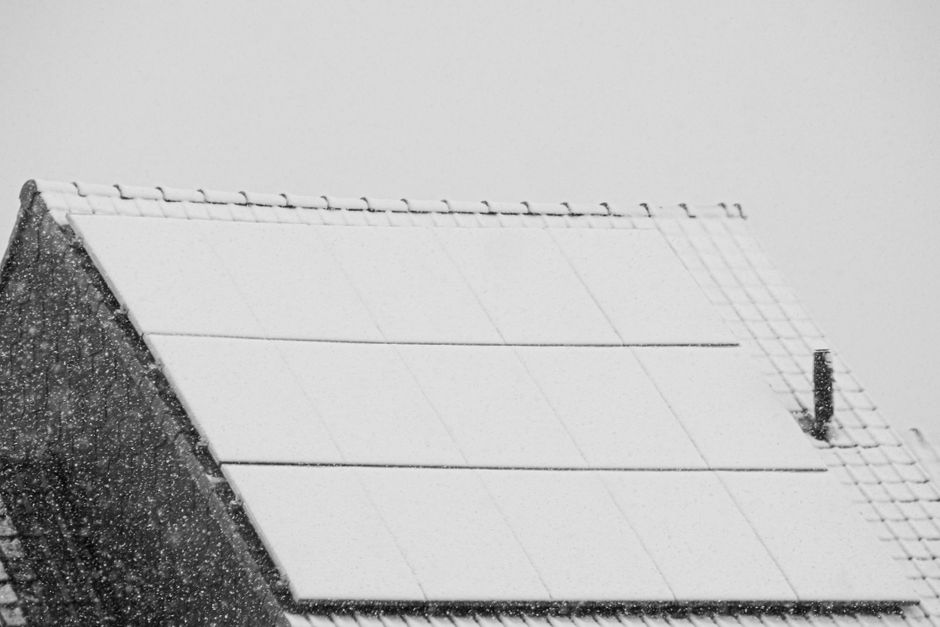
Weather significantly impacts solar panel performance. Rain can reduce efficiency by 10–25% by blocking sunlight, while snow completely blocks panels but typically melts quickly. Cold temperatures actually improve panel efficiency, though extreme heat reduces output by 0.5% per degree Celsius above 25°C.
How Rain Affects Solar Panel Efficiency
Rain is one of the most misunderstood weather factors in residential solar production. While heavy rainfall obviously reduces the direct sunlight reaching your panels, the relationship between precipitation and output is more nuanced than most homeowners expect.
Do Solar Panels Work in Rain and Cloudy Weather?
Yes — solar panels continue generating electricity during rain and overcast conditions, but at reduced capacity. Light rain with partial cloud cover typically cuts output by 10–25%, while heavy storm conditions can push that reduction closer to 40–90%. Panels rely on diffuse light (scattered sunlight through clouds), not just direct sunlight, which is why they never fully stop working during daylight hours even in poor weather.
There is a meaningful upside to rainy weather that often goes unmentioned: rainfall naturally cleans your panels. Dust, pollen, bird droppings, and particulate matter all accumulate on panel surfaces and can reduce output by 5–7% over time. A good rainstorm essentially performs a free maintenance wash, restoring baseline efficiency without requiring manual cleaning. According to the U.S. Department of Energy’s Solar Energy Technologies Office, keeping panels clean is one of the simplest steps homeowners can take to protect long-term output.
Snow Impact on Solar Panel Output
Snow is the weather event that genuinely stops solar production in its tracks — but the interruption is usually shorter than homeowners fear. A complete snow cover blocks virtually 100% of sunlight from reaching solar cells, bringing output to near zero. However, several factors work in your favor when dealing with winter snowfall.
How Much Does Snow Reduce Solar Panel Efficiency?
A full snow cover reduces solar panel efficiency by nearly 100% for the duration it remains on the panel surface. The practical impact on your annual production, however, is typically smaller than that figure suggests. Most residential solar panels are installed at a tilt angle (commonly 20–35 degrees), which promotes natural snow sliding. Additionally, dark panel surfaces absorb heat and accelerate melting even in cold ambient temperatures.
Light dustings of snow often clear within hours. Heavier accumulations may last one to three days depending on tilt angle, ambient temperature, and panel orientation. Research on how weather affects solar efficiency consistently shows that snow-related annual losses in most U.S. climates represent only 1–5% of total yearly production — a manageable figure when calculating your true payback period.
One important caveat: partial snow cover can cause more production loss than total coverage in some panel configurations due to shading effects on series-wired strings. Even a small shaded section can disproportionately reduce the output of an entire string, which is why microinverters or DC power optimizers are worth considering in high-snowfall regions.
Temperature Effects on Solar Panel Performance
Of all weather variables, temperature has the most counterintuitive relationship with solar output — and understanding it is critical for accurate solar ROI calculations. Most homeowners assume hot, sunny summer days are ideal for solar production. Sunlight intensity is certainly maximized in summer, but heat itself actually works against your panels.
Solar panels are tested and rated at a standard test condition (STC) of 25°C (77°F). Above that threshold, panel efficiency degrades at a rate defined by each panel’s temperature coefficient, typically around -0.3% to -0.5% per degree Celsius. This means a panel running at 65°C on a hot rooftop — a realistic scenario in summer — could be operating at 80–85% of its rated capacity simply due to heat stress.
Solar panel performance in cold weather, by contrast, is genuinely superior. A clear, cold winter day with strong sunlight produces excellent output because the low ambient temperature keeps panels operating well below 25°C, allowing them to exceed their STC-rated efficiency. This is why locations like Colorado, Minnesota, and the U.S. Northeast can still be strong solar markets despite harsh winters. The Department of Energy’s solar resources provide regional production data that accounts for these thermal effects when estimating system performance.
Seasonal Weather Variations and Solar Production
Combining rain, snow, and temperature effects into a full-year picture is how solar professionals calculate realistic annual output. Most U.S. installations follow a predictable seasonal production curve:
- Spring: Strong performance — moderate temperatures, increasing daylight hours, occasional rain providing natural cleaning
- Summer: Peak sunlight hours but reduced panel efficiency due to heat; net production is still typically highest of the year
- Fall: Declining daylight hours, ideal temperatures, generally clear skies in many regions
- Winter: Shortest days, potential snow losses, but cold temperatures improve per-hour panel efficiency
When sizing a solar system for your home, these seasonal variations are factored into peak sun hour calculations for your specific ZIP code. A system designed purely around your worst-month production will be oversized; one designed for average annual output will have some months of surplus and some of shortfall. Understanding this pattern helps you make smarter decisions about battery storage and net metering agreements with your utility.
Protecting Your Solar Panels from Extreme Weather
Modern residential solar panels are engineered to handle significant weather stress. Most carry an IEC 61215 certification, the international standard for crystalline silicon panel durability, which includes testing for hail impact, wind load, humidity, and thermal cycling. Panels certified to this standard have demonstrated resilience against 1-inch diameter hail at 50 mph impact velocity.
For homeowners in regions with extreme weather, a few practical steps protect long-term performance:
- Have your installer verify racking hardware is rated for local wind and snow load requirements per your jurisdiction’s building code
- Inspect mounting hardware annually for corrosion, particularly in coastal salt-air environments
- Clear heavy snow accumulations only if safe to do so — never use sharp tools on panel surfaces
- Review your monitoring data seasonally to catch underperforming panels before small issues become expensive problems
How to Use the Solar Savings Calculator
Understanding weather impacts is only useful when you can see what they mean for your specific home’s finances. Our Solar Savings Calculator factors in your local climate data, regional utility rates, and current federal and state incentive programs to give you a realistic payback period and 25-year ROI estimate. Enter your ZIP code and average monthly electric bill to get started — the calculator applies location-specific solar production estimates that already account for your area’s seasonal weather patterns.
Frequently Asked Questions
Do solar panels work in rain and cloudy weather?
Yes. Solar panels generate electricity from diffuse light even under heavy cloud cover, typically producing 10–25% of their normal output during rain and 5–15% during dense overcast. They do not require direct sunlight to function — only daylight.
How much does snow reduce solar panel efficiency?
Complete snow coverage reduces panel output by nearly 100% while it remains in place. However, the annual production loss from snow is typically only 1–5% for most U.S. installations, since panels clear relatively quickly due to tilt angle and panel surface heat absorption.