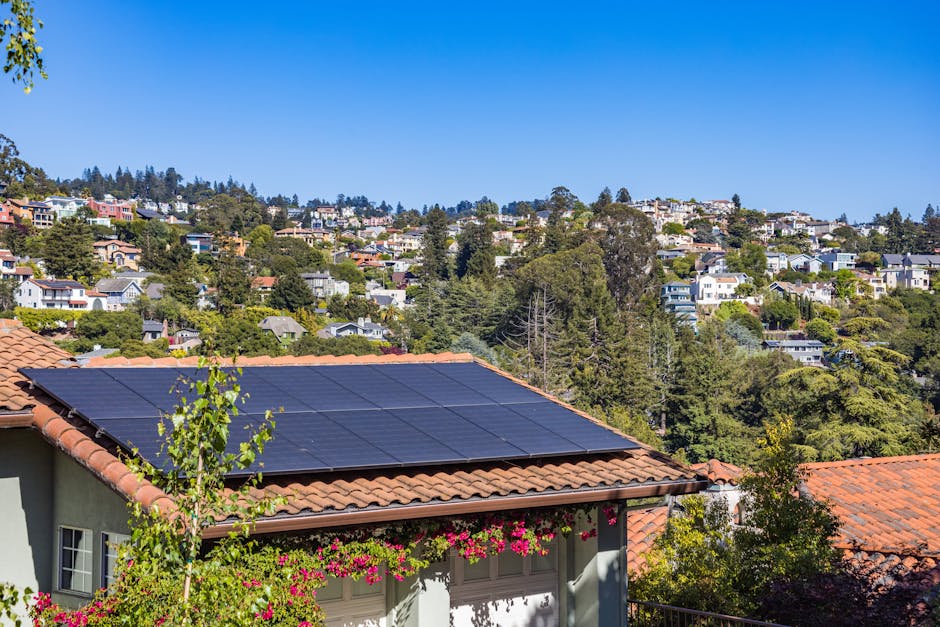
Residential solar systems typically cost $15,000-$25,000 before incentives with a 30% federal tax credit for homeowners. Small business solar ranges from $25,000-$100,000+ and qualifies for investment tax credits, depreciation deductions, and accelerated deduction options that often exceed residential benefits.
Residential Solar vs Small Business Solar: Key Differences
The solar industry serves two distinct markets, and understanding the differences between residential and business installations is essential for calculating realistic ROI and long-term savings. While both leverage the sun’s energy, the financial structures, incentive programs, and operational considerations differ significantly.
Residential solar focuses on individual homeowners reducing their monthly electricity bills. These systems are typically smaller (3-10 kW) and installed on rooftops or ground-mounted on residential properties. The primary motivation is energy independence and lower utility costs.
Small business solar, conversely, serves commercial operations—from farms to retail stores to manufacturing facilities. These systems are often larger (10-100 kW+) and designed to offset substantial operational electricity consumption. Businesses view solar as both a cost-reduction tool and a capital investment eligible for substantial tax deductions.
The key operational difference: homeowners use solar electricity immediately for personal consumption, while businesses often have higher energy demands and can capture greater tax benefits through accelerated depreciation schedules. This fundamental distinction shapes the entire financial equation.
What is the difference between residential and commercial solar tax credits?
The federal solar Investment Tax Credit (ITC) applies to both residential and commercial installations, but the benefits diverge substantially. According to official Department of Energy resources, the residential ITC allows homeowners to claim 30% of system costs on their federal income taxes. For a $20,000 system, this equals $6,000 in tax liability reduction.
Business solar tax credits are significantly more advantageous. Commercial entities claim the same 30% ITC, but gain additional depreciation deductions through Modified Accelerated Cost Recovery Systems (MACRS). This accelerated depreciation schedule allows businesses to deduct the remaining 70% of system costs over five years, creating substantial annual tax deductions.
Additionally, small businesses may qualify for Section 179 expensing, allowing full deduction of solar system costs in the year of installation (subject to annual limitations). These combined residential vs commercial solar tax credits often result in businesses recovering 50-70% of total system costs through tax benefits alone, compared to residential homeowners’ 30% federal credit.
State and local incentives vary considerably. Some states offer additional residential rebates or tax credits, while others provide accelerated depreciation schedules exclusively for commercial systems. Consulting your local utility and state energy office helps clarify available incentive stacking opportunities.
Cost Breakdown: Residential vs Small Business Solar Systems
Understanding installation costs is foundational for calculating payback periods. The national average residential solar cost comparison shows significant pricing differences based on system size and installation complexity.
Residential Solar Costs:
- Average system size: 5-8 kW
- Total installed cost: $15,000-$25,000 (pre-incentives)
- Cost per watt: $2.50-$3.50
- Average federal tax credit: $4,500-$7,500
- Net cost after incentives: $10,000-$17,500
Small Business Solar Costs:
- Average system size: 25-50 kW
- Total installed cost: $62,500-$175,000 (pre-incentives)
- Cost per watt: $2.00-$3.00
- Federal ITC (30%): $18,750-$52,500
- MACRS depreciation benefit: $43,750-$122,500
- Potential net cost after tax benefits: $0-$87,500
How much does small business solar installation cost compared to home solar? The answer depends on energy consumption and system design. Businesses typically achieve lower per-watt costs due to larger systems benefiting from economies of scale. A 50 kW commercial system may cost $2.00-$2.50 per watt, while a 6 kW residential system might cost $3.00-$3.50 per watt.
Additionally, commercial installations often qualify for performance-based incentives, demand response programs, and utility rebates unavailable to residential customers. These additional incentives further reduce the effective cost of business solar installations.
Tax Credits and Incentives: Residential and Commercial Comparison
Tax incentive structures fundamentally differ between residential and commercial solar. Both benefit from the 30% federal ITC through 2032, but commercial systems unlock additional advantages.
Residential Incentives Limited to:
- 30% federal investment tax credit (non-transferable)
- State/local tax credits (varies by location)
- Utility rebates (typically $0.50-$2.00 per watt)
- Net metering credits (electricity bill reductions)
Small Business Incentives Include All Above Plus:
- MACRS depreciation (5-year accelerated schedule)
- Section 179 expensing (immediate full deduction, subject to limits)
- Bonus depreciation (100% in 2024-2025, phasing down)
- Investment tax credits (transferable to partnerships/LLCs)
- Commercial performance incentives
- Enhanced utility demand-response programs
The commercial solar ROI differences become apparent when calculating total tax benefits. A small business investing $100,000 in solar might recover $30,000 through the ITC, then depreciate remaining costs at accelerated rates, potentially reducing annual tax liability by $15,000-$20,000 for five years. This creates total tax benefits of $100,000-$130,000—essentially financing the entire system through tax savings.
ROI and Long-Term Savings: Which Makes More Financial Sense
Calculating payback periods requires understanding your local utility rates and system performance. Use our solar ROI calculator to input your specific electricity costs and system size.
Residential solar typically achieves payback periods of 6-9 years in high-electricity-cost states, extending to 10-12 years in lower-cost regions. After payback, homeowners enjoy 15+ years of free electricity and continued savings through net metering credits.
Small business solar achieves faster payback—often 3-5 years when combining electricity bill reductions with substantial tax benefits. Higher energy consumption means greater absolute savings, and accelerated depreciation deductions reduce effective costs immediately upon installation.
Long-term savings favor both residential and business solar, but the mathematics differ. A homeowner with a 25-year system lifespan might save $40,000-$60,000 in electricity costs. A small business with similar lifespan could save $100,000-$200,000 in combined electricity and tax benefits, plus qualify for additional utility incentives.
Financing Options for Residential and Small Business Solar
Both residential and commercial customers access similar financing mechanisms, though terms differ substantially.
Residential Financing: Cash purchases, solar loans, home equity lines of credit (HELOC), and leasing arrangements dominate residential markets. Solar loans enable homeowners to access the 30% federal tax credit while spreading payments over 5-10 years.
- SolarEdge Inverter System — Essential component for both residential and business solar installations; high search volume for upgrading existing systems
- Solar Monitoring System & Performance Tracker — Complements solar installations for both home and business; readers planning systems would benefit from tracking ROI on their $15K-$100K+ investment
- EnergySage Solar Marketplace (Affiliate Program) — Direct fit – connects readers comparing residential vs business solar options with pre-vetted installers; high commission potential for lead generation