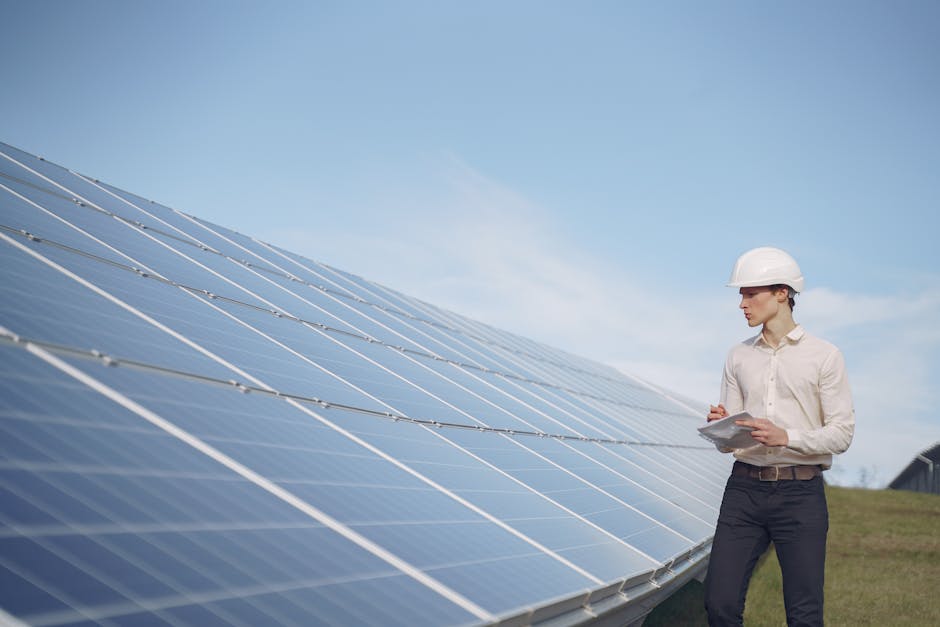
Solar panels do work on cloudy days, generating 10-25% of their rated capacity. While cloud cover reduces efficiency compared to sunny conditions, diffuse light still produces usable electricity. Modern solar panels capture both direct and indirect sunlight, making them viable in most climates year-round.
Do Solar Panels Work on Cloudy Days?
One of the most common misconceptions about residential solar is that panels require bright sunshine to function. The reality is more nuanced. Solar panels generate electricity from both direct sunlight and diffuse light—the indirect radiation that penetrates clouds and reaches Earth’s surface. Even on overcast days, enough light reaches your roof to power a meaningful portion of your home’s electricity needs.
The key to understanding solar efficiency overcast weather lies in how photovoltaic cells work. These cells respond to photons (light particles) regardless of whether they arrive directly from the sun or scattered through the atmosphere. On a cloudy day, the photons are simply more dispersed, resulting in lower voltage output—but output nonetheless. Research shows that solar panels typically produce between 10-25% of their rated capacity under heavy cloud cover, and often 50% or more under light cloud conditions.
This means that even in regions with frequent overcast weather, solar remains a practical investment. Cities like Seattle, Portland, and Boston have seen rapid solar adoption despite their reputation for gray skies, because the economics still work when you account for local electricity rates and available incentives.
How efficient are solar panels on cloudy days?
Solar panel performance rain and cloud cover depends on several factors: cloud thickness, cloud type, and time of day. Thin, wispy clouds allow more light penetration than dense storm clouds. A partly cloudy day with scattered cumulus clouds might deliver 40-60% of peak output, while thick stratocumulus clouds could reduce output to 15-25%.
Modern panel technology has improved significantly. High-efficiency monocrystalline panels—the industry standard today—are particularly effective at capturing diffuse light. They can extract electricity from light wavelengths that older panel designs would miss. Temperature also plays a role; interestingly, cloudy days are often cooler, and solar panels actually perform slightly better at lower temperatures, which partially offsets the reduced light.
Do solar panels work without direct sunlight?
Yes, absolutely. This is perhaps the most important clarification: solar panels do not require direct sunlight to generate electricity. They require light, which is present even on completely overcast days. The difference between a sunny day and a cloudy day isn’t whether electricity is produced—it’s how much electricity is produced.
Think of it like vision: you can see and read indoors under artificial light, but you see more clearly near a window. Similarly, solar panels “see” and capture light even in dim conditions. This is why, according to the U.S. Department of Energy, solar installations in cloudy climates remain economically viable when accounting for annual weather patterns and local electricity costs.
How Much Efficiency is Lost in Cloud Cover
Understanding the relationship between cloud cover and solar panel performance rain outcomes helps set realistic expectations for your installation. Most homeowners should expect their annual solar production to be reduced by roughly 15-25% compared to the theoretical maximum for their location, based on historical weather patterns.
The U.S. experiences significant regional variation. Sunnier regions like Arizona, California, and Florida naturally see higher capacity factors (the percentage of maximum output achieved over time), ranging from 24-26%. Cloudier regions in the Northeast or Pacific Northwest typically see capacity factors of 13-15%. However, this doesn’t mean solar doesn’t make financial sense in cloudier areas—it simply means the payback period extends by a few years compared to sunnier locations.
Here’s what actually happens when clouds pass overhead:
- Light clouds (40-70% transmittance): Panels produce 60-80% of peak output
- Medium clouds (20-40% transmittance): Panels produce 25-50% of peak output
- Heavy clouds (less than 20% transmittance): Panels produce 10-25% of peak output
The critical insight: even heavy cloud cover doesn’t stop electricity production. It reduces it significantly, but the system continues working. Over the course of a year with a mix of sunny, partly cloudy, and overcast days, your system accumulates substantial energy production that translates to real savings on your electricity bill.
Common Myths About Solar and Cloudy Weather
Several persistent myths prevent homeowners in cloudy climates from exploring solar. Let’s debunk the most damaging ones:
Myth 1: Solar panels only work in direct sunlight. False. Panels produce electricity from any visible light. Germany, which is cloudier than most U.S. regions, is the world leader in residential solar adoption. This happened because of technology and incentives, not weather perfection.
Myth 2: Snow and rain completely disable solar panels. Snow does temporarily block panels, but most systems shed snow quickly due to panel angle and smooth surface texture. Rain actually cleans panels and has minimal impact on output. A light rain might reduce output by 20-30%, but normal rainfall doesn’t significantly affect annual production statistics.
Myth 3: Living in a cloudy area makes solar financially pointless. This depends on your electricity rates and available incentives. High electricity costs combined with state or federal tax credits can make solar economical even with reduced production. A 25-year system might still save $50,000+ in a cloudy state with high rates.
Myth 4: Solar panels need constant direct sunshine to be worth installing. False. System economics are based on annual production and annual costs. One year of weather data shows the real picture, not daily conditions.
Maximizing Solar Output Year-Round
If you’re concerned about cloudy weather in your area, several strategies optimize your solar investment:
Optimize panel orientation. Slight adjustments to roof angle can capture diffuse light more effectively. East and west-facing panels capture more light throughout the day compared to panels installed flat against the roof.
Choose high-efficiency panels. Premium monocrystalline panels with efficiency ratings of 20-22% cost more upfront but excel in low-light conditions. The additional production on cloudy days can accelerate your payback period.
Pair solar with battery storage. Cloudy days produce less electricity, but with a battery backup system, you store excess production from sunny days for use when needed. This maximizes your energy independence.
Evaluate your roof condition. Shade from trees, adjacent buildings, or roof penetrations impacts production far more than cloud cover. A shade analysis during site assessment identifies and quantifies these factors.
How to Use the Calculator to Estimate Your Savings
The best way to move past these myths is to run the numbers for your specific situation. Our solar ROI calculator accounts for your local weather patterns, electricity rates, and available incentives to project real savings and payback periods.
Simply enter your location, recent electricity bill, and roof characteristics. The calculator automatically factors in regional cloud cover and historical weather data to estimate annual solar production. You’ll see your projected 10-year and 25-year savings broken down by month, helping you understand how seasonal variation—including cloudy winter months—affects your investment.
For a deeper analysis specific to challenging weather conditions, our solar efficiency calculator isolates how cloud cover, temperature, and other factors reduce your theoretical maximum production. This transparency helps you make informed decisions with realistic expectations.
FAQ
Can solar panels generate
Recommended Resources:
- Renogy 400W Solar Panel Kit — Practical solar equipment for readers interested in implementing solar solutions; directly relevant to understanding real-world solar performance
- Kill A Watt Power Meter — Allows readers to monitor actual solar panel output on cloudy days, validating the 10-25% efficiency claims discussed in the post
- Solar Power Bank 25000mAh — Demonstrates practical solar technology that works in low-light conditions; appeals to readers wanting to test solar viability without full installation
- Renogy 400W Solar Panel Kit — Practical solar equipment for readers interested in implementing solar solutions; directly relevant to understanding real-world solar performance
- Kill A Watt Power Meter — Allows readers to monitor actual solar panel output on cloudy days, validating the 10-25% efficiency claims discussed in the post
- Solar Power Bank 25000mAh — Demonstrates practical solar technology that works in low-light conditions; appeals to readers wanting to test solar viability without full installation