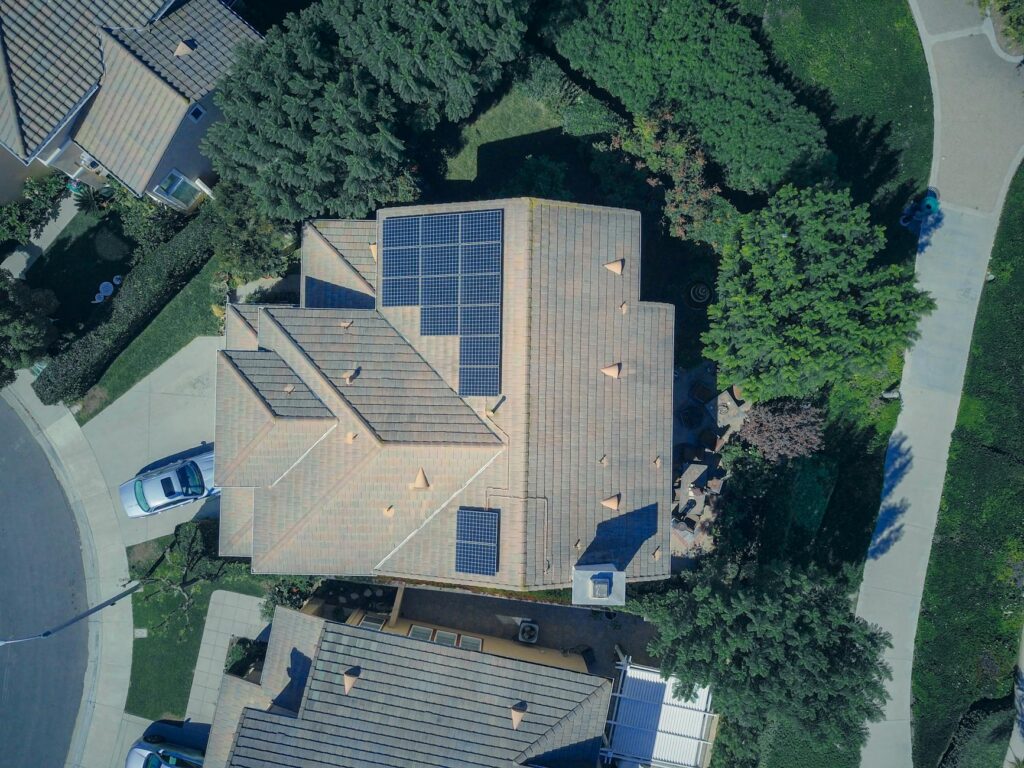
Whether ground-mounted or rooftop solar is better depends on your property layout, budget, and long-term goals. Rooftop systems maximize limited space and require no additional land, while ground-mounted systems offer superior flexibility, easier maintenance, and better performance in certain climates. For most homeowners with adequate roof space, rooftop installation remains the practical choice—but ground-mounted systems are increasingly attractive for larger properties and commercial applications.
Rooftop Solar Systems: Advantages and Limitations
Rooftop solar installations remain the most popular residential choice, and for good reason. They require no additional land, utilize otherwise unused space, and integrate seamlessly into most home aesthetics. Installation is straightforward on south-facing roofs with minimal shade, and the costs are typically lower because installers can access the roof safely with standard equipment.
However, rooftop systems come with important limitations. Your roof’s age, material, and structural integrity directly impact feasibility. If your roof needs replacement within 10-15 years, you’ll face additional costs to remove and reinstall panels. Roof pitch, shade from trees or nearby buildings, and local weather patterns affect energy production. Additionally, maintenance can be more challenging—cleaning panels or addressing repairs requires safety equipment and precautions.
Rooftop systems also generate more heat buildup, which can reduce panel efficiency by 10-15% in hot climates. You’re also limited by available roof space, which may not accommodate your desired system size if you have a smaller home or complex roof design.
Ground-Mounted Solar Systems: Flexibility and Performance Benefits
Ground-mounted systems offer compelling advantages for property owners with available land. Since panels are installed lower and with better air circulation, they naturally run cooler and produce approximately 10-15% more energy in hot climates compared to identical rooftop systems. This performance boost, called the cooling effect, can significantly impact your return on investment over 25+ years.
Ground-mounted systems provide unmatched flexibility. You can position arrays at optimal angles for your specific latitude, adjust tilt seasonally if desired, and expand the system easily as your energy needs grow. Maintenance becomes remarkably simple—you can walk around panels to inspect and clean them without special equipment. If panels need replacement, the work is straightforward without roof access concerns.
These systems work exceptionally well on properties with ground-level shade from trees or structures that would make rooftop installation impractical. They’re ideal for agricultural operations, remote properties, and commercial installations. However, ground-mounted systems require adequate usable land, cost more to install due to foundation work and structural support, and may face homeowner association restrictions or zoning limitations. Snow accumulation can be an issue in winter climates, and some communities have aesthetic concerns about ground-level panels visible from the street.
Cost Comparison and Long-Term Value
Rooftop systems typically cost $2.50-$3.50 per watt installed, while ground-mounted systems run $3.00-$4.00 per watt due to mounting structures and site preparation. For a standard 6-kilowatt residential system, expect rooftop installation around $15,000-$21,000 versus $18,000-$24,000 for ground-mounted after accounting for labor and materials.
Despite higher upfront costs, ground-mounted systems often provide better long-term value through superior energy production and lower maintenance expenses. In hot climates where the cooling effect is substantial, a ground-mounted system could produce 10-15% more electricity over 25 years—potentially adding $5,000-$8,000 in cumulative energy savings that justify the initial investment premium.
You should also factor in roof replacement timeline. If your current roof has 5-8 years remaining, installing rooftop solar now means removing and reinstalling panels during reroof work—adding $2,000-$3,000 in unplanned costs. A ground-mounted system eliminates this future expense entirely. Additionally, ground-mounted systems may qualify for different financing options or incentives in your region, so it’s worth checking with local solar installers about area-specific programs.
How to Determine Which System Fits Your Property
The best choice depends on evaluating your specific situation. Use our solar cost and savings calculator to input your roof condition, available land, annual electricity usage, and location. The calculator will generate estimates for both system types, showing projected savings, payback periods, and 25-year lifetime value—helping you make an informed decision based on real numbers for your property.
Beyond the calculator, ask yourself these questions: Is my roof less than 15 years old with good southern exposure and minimal shade? Do I have open, usable ground space without aesthetic or zoning restrictions? What’s my climate—hot and sunny (favoring ground-mounted cooling effects) or variable? Are there mature trees likely to cast increasing shade as they grow? What’s my timeline to potentially replace the roof? Honest answers reveal which system aligns with your property’s unique characteristics.
Frequently Asked Questions
Can I have both rooftop and ground-mounted panels in the same system?
Yes, absolutely. Many property owners install hybrid systems using both rooftop and ground-mounted arrays. This approach maximizes your available space, allows you to avoid shaded roof areas while still utilizing them, and provides operational flexibility. However, it does increase installation complexity and cost. Hybrid systems work best when you need more capacity than a single rooftop can provide, or when combining both approaches avoids significant shading issues.
How much space do I actually need for a ground-mounted solar system?
A typical residential 6-kilowatt system requires approximately 300-400 square feet of ground space when accounting for spacing between rows to prevent shading. For perspective, that’s roughly equivalent to a single-car garage footprint. Larger systems require proportionally more space. Before committing to ground-mounted installation, measure available space and ensure it receives unobstructed sunlight from approximately 9 AM to 3 PM year-round.
Does a ground-mounted system require special permits or zoning approval?
Requirements vary significantly by location. Some municipalities treat ground-mounted solar like standard rooftop systems with minimal permitting, while others classify them as structures requiring setback distances, height limitations, or homeowner association review. Always contact your local building department and review HOA restrictions before purchasing a ground-mounted system. This step typically takes 2-4 weeks but prevents costly complications later.