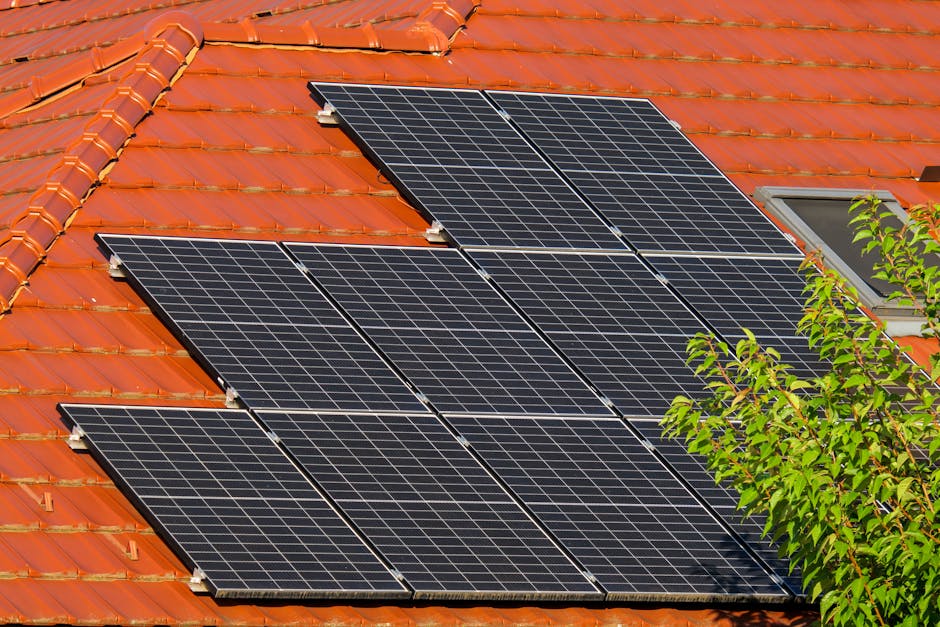
If you’re a homeowner thinking about going solar, the single most important step you can take is using a solar system size calculator to determine exactly how many panels your home needs, what they’ll cost, and how quickly they’ll pay for themselves. Getting the size right isn’t just a technical detail — it’s the difference between a system that eliminates your electric bill and one that leaves you still writing checks to the utility company every month. And because energy production fluctuates with the seasons, the time of year you start planning matters more than most people realize.
Why a Solar System Size Calculator Is Essential Before You Buy
Solar panels are a significant investment. The average residential system in the United States costs between $17,000 and $32,000 before the federal tax credit, depending on system size and location. Overshoot your needs and you tie up capital in panels that produce more energy than you can use or sell back. Undersize your system and you’re still relying on grid electricity during peak months, stretching your payback period from 7 years to 12 or more.
A proper calculator takes into account several variables that generic estimates miss:
- Your annual electricity consumption — pulled directly from your utility bills, measured in kilowatt-hours (kWh).
- Your location’s solar irradiance — a home in Phoenix receives roughly 6.5 peak sun hours per day, while a home in Seattle averages about 3.8.
- Roof orientation and tilt — south-facing roofs at a 30° tilt in the Northern Hemisphere can produce up to 25% more energy than east- or west-facing panels.
- Shading and obstructions — even partial shade from a single tree can reduce a panel’s output by 20–40%.
- Local utility rates and net metering policies — these determine the dollar value of every kWh your system generates.
Without accounting for all of these, you’re guessing. And guessing with a $25,000 purchase is not a strategy.
How Seasonal Changes Affect Your Solar System Sizing
This is where most homeowners get tripped up. Solar production is not constant throughout the year, and your electricity usage probably isn’t either. If you’re sizing your system in July, you might look at your current electric bill — say, $280/month thanks to air conditioning — and assume that’s your baseline. But your January bill might be $120. Sizing for the peak month alone could lead to an oversized system that costs thousands more than necessary.
Summer vs. Winter Production
In most U.S. locations, a solar panel system produces 40–60% more electricity in June and July than it does in December and January. A 7 kW system in Charlotte, North Carolina, for example, will generate roughly 1,050 kWh in July but only about 550 kWh in December. That’s nearly a 2:1 ratio.
The smart approach is to size your system based on your total annual electricity consumption, not any single month. If you use 10,800 kWh per year, you need a system that produces 10,800 kWh annually — and the calculator will figure out how many panels and what wattage that requires for your specific zip code.
Spring and Fall: The Planning Sweet Spot
Spring (March through May) and early fall (September through October) are ideal times to evaluate and plan a solar installation for two practical reasons:
- Your utility bills from the past 12 months are available, giving you a complete picture of seasonal consumption patterns.
- Installer availability is higher. Summer is peak installation season, which means longer wait times and less room to negotiate pricing. Planning in spring or fall means your system can be designed, permitted, and installed before the next high-production season begins.
Homeowners who plan in spring and install by early summer often start seeing returns immediately during the highest-production months of the year.
Real Numbers: What Sizing Looks Like for a Typical Home
Let’s walk through a concrete example. Say you’re a homeowner in Austin, Texas. Your annual electricity usage is 12,000 kWh. Austin averages about 5.5 peak sun hours per day. Here’s how the math breaks down:
- Daily production needed: 12,000 kWh ÷ 365 days = 32.9 kWh/day
- System size required: 32.9 kWh ÷ 5.5 sun hours ÷ 0.80 (system efficiency factor) = approximately 7.5 kW
- Number of panels: 7,500 watts ÷ 400 watts per panel = approximately 19 panels
- Estimated cost before tax credit: 7.5 kW × $2.85/watt = $21,375
- Cost after 30% federal tax credit: $14,963
- Annual savings at $0.13/kWh: $1,560
- Simple payback period: $14,963 ÷ $1,560 = approximately 9.6 years
After payback, that system continues producing free electricity for another 15–20 years, generating $23,000–$31,000 in cumulative savings over its lifetime. These numbers shift dramatically based on your state’s electricity rates — homeowners in California or Massachusetts paying $0.25/kWh or more can see payback periods as short as 5–6 years.
Factors That Can Shrink Your Payback Period
Beyond the federal Investment Tax Credit (ITC) at 30% through 2032, several other factors can accelerate your return on investment:
- State and local incentives: States like New York, Maryland, and Illinois offer additional rebates or Solar Renewable Energy Credits (SRECs) worth $1,000–$10,000+.
- Net metering: If your utility offers full retail net metering, every excess kWh you send to the grid offsets a kWh you’d otherwise buy — effectively using the grid as a free battery.
- Time-of-use rates: In states with TOU pricing, solar energy produced during expensive afternoon peak hours is worth significantly more than flat-rate electricity.
- Rising utility rates: U.S. electricity prices have increased an average of 2.5–3% annually over the past decade. Your savings compound every year as rates climb while your solar cost stays fixed at zero.
Use a Solar System Size Calculator to Get Your Personalized Estimate
Every home is different. Your neighbor’s 6 kW system might be perfect for their ranch-style house with a clear south-facing roof, but your two-story colonial with mature oak trees might need an 8.5 kW system with optimizers to achieve the same offset. The only way to know is to run the numbers with your actual data.
That’s exactly what our free solar system size calculator is built to do. It takes your location, electricity usage, roof characteristics, and local incentives into account to deliver a personalized estimate of system size, cost, savings, and payback period — in under two minutes, with no obligation.
Ready to find out what solar can do for your home? Head to SolarEstimatorPro.com and run your free calculation today. The sooner you have real numbers, the sooner you can stop overpaying your utility company and start investing in energy you own.
- Kill A Watt Power Meter — Helps homeowners measure their actual electricity consumption, which is essential input data for accurately calculating solar system size needs
- Solar Panel Mounting Hardware Kit — Practical complement for homeowners who’ve calculated their solar needs and are ready to move toward installation planning
- Sunforce Solar Battery Bank System — Relevant add-on product for solar system sizing, as homeowners need to consider battery storage capacity alongside panel count and wattage requirements