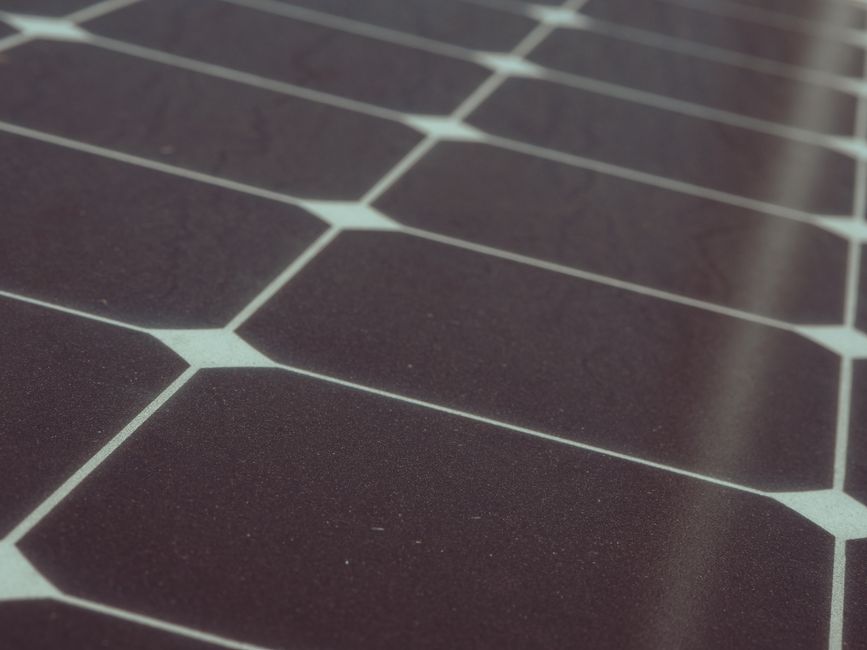
Solar panels typically lose 0.5–0.8% of their efficiency per year, resulting in 12–20% total efficiency loss over 25 years. Most quality panels retain 80–88% of their original output after 25 years, though degradation rates vary by manufacturer and environmental conditions.
What Is Solar Panel Degradation?
Solar panel degradation refers to the gradual decline in a panel’s ability to convert sunlight into electricity over time. This is a natural, unavoidable process caused by physical and chemical changes within the photovoltaic cells — but understanding it helps you make smarter purchasing and financial decisions.
Manufacturers account for this decline by offering performance warranties that guarantee a minimum output level after 25 years. Most tier-one manufacturers warrant that panels will produce at least 80–83% of their original rated power at the end of a 25-year warranty period. According to the U.S. Department of Energy’s Solar Energy Technologies Office, ongoing research continues to improve cell durability and reduce long-term degradation rates across panel technologies.
It’s important to distinguish between degradation (slow, expected efficiency decline) and failure (sudden malfunction). A well-maintained panel won’t fail — it simply produces slightly less power each year. That distinction matters significantly when calculating your system’s lifetime energy output and return on investment.
Average Degradation Rates and Efficiency Loss
How much efficiency do solar panels lose per year?
The industry-standard degradation rate for modern solar panels is approximately 0.5% per year for premium panels and up to 0.8% per year for standard models. Older or lower-quality panels can degrade at 1% or more annually.
Here’s what that means in real numbers for a 400-watt panel:
- Year 1: ~400W (100% output)
- Year 10: ~380W (95% output at 0.5%/yr)
- Year 20: ~361W (90.3% output at 0.5%/yr)
- Year 25: ~352W (88% output at 0.5%/yr)
At a 0.8% annual rate, that same panel would produce roughly 340W (85% output) by year 25 — still functional, but noticeably reduced. When multiplied across an entire system and 25 years of utility bills, the difference between 0.5% and 0.8% degradation can amount to hundreds or even thousands of dollars in lost savings.
Use our solar savings calculator to model how different degradation rates affect your system’s lifetime energy production and financial return.
Factors That Accelerate Solar Panel Degradation
Do solar panels degrade faster in hot climates?
Yes — high ambient temperatures are one of the most significant accelerators of solar panel degradation. Prolonged heat stress causes microcracks in silicon cells, accelerates encapsulant yellowing, and degrades junction box connections faster than in moderate climates.
Key factors that increase degradation rates include:
- Extreme heat: Panels in desert climates (Arizona, Nevada, Texas) often experience higher degradation than panels in cooler regions, even though they produce more total energy annually.
- UV exposure: Constant UV radiation causes the protective encapsulant to yellow over time, reducing light transmission to the cells.
- Thermal cycling: Repeated expansion and contraction from day/night temperature swings creates mechanical stress and promotes microcracking.
- Humidity and moisture: Coastal and humid environments accelerate corrosion of cell connections and frames.
- Physical soiling and snow loads: Dirt accumulation and heavy snow can cause localized stress on panels, particularly if mounting is inadequate.
Panel technology matters too. Monocrystalline PERC and TOPCon panels generally demonstrate lower degradation rates than older polycrystalline models, making them a better long-term investment in challenging climates.
How Degradation Affects Your Solar Savings
Solar panel efficiency loss over time directly reduces the kilowatt-hours your system produces — and every kWh shortfall is energy you purchase from the utility grid instead. Over a 25-year span, a system that degrades at 0.8%/year instead of 0.5%/year may fall short by 3–5% of projected lifetime production. On a 10 kW system in a state with $0.15/kWh rates, that gap could represent $1,500–$2,500 in lost savings.
This is why your payback period calculation should always incorporate a realistic degradation assumption rather than using a flat production estimate. Many online calculators default to zero degradation — which overstates savings and understates your true payback period.
To accurately assess solar panel lifespan and performance in your specific location, you need to factor in:
- Your panel’s warranted degradation rate (check the product datasheet)
- Your local utility rate and its annual escalation trend
- Any net metering policy changes that could affect export credit value
- Federal and state incentives that offset the upfront cost
The federal Investment Tax Credit (ITC) was 30% through the end of 2025, but the One Big Beautiful Bill Act ended it for residential systems installed in 2026, so it no longer applies to new 2026 installations. Learn more about available incentives at energy.gov’s solar resource hub.
Ways to Minimize Panel Degradation
While some degradation is inevitable, proactive steps can keep your system performing at the higher end of its rated range throughout its lifespan:
- Choose panels with a low warranted degradation rate. Look for products that warranty less than 0.5%/year and guarantee at least 85% output at year 25.
- Invest in proper installation. Adequate ventilation beneath panels reduces heat buildup, one of the top degradation drivers. Ensure your installer follows racking manufacturer guidelines.
- Clean panels regularly. Dirt and bird droppings can cause localized hotspots that accelerate cell-level degradation. A semi-annual rinse is usually sufficient in most climates.
- Monitor system performance. Modern inverters provide production data that can reveal early signs of accelerated degradation or equipment issues. A sudden production drop often signals a fixable problem — not irreversible cell damage.
- Shade management. Consistent partial shading causes hotspot formation, which degrades affected cells faster. Trim trees and ensure no new obstructions block panel surfaces over time.
How to Use the Calculator to Model Degradation Impact
The most accurate way to understand how solar panel degradation affects your specific investment is to run the numbers with your local data. Our solar payback period calculator lets you input your panel’s degradation rate, local utility costs, and system size to generate a realistic 25-year savings projection — not an optimistic flat-rate estimate.