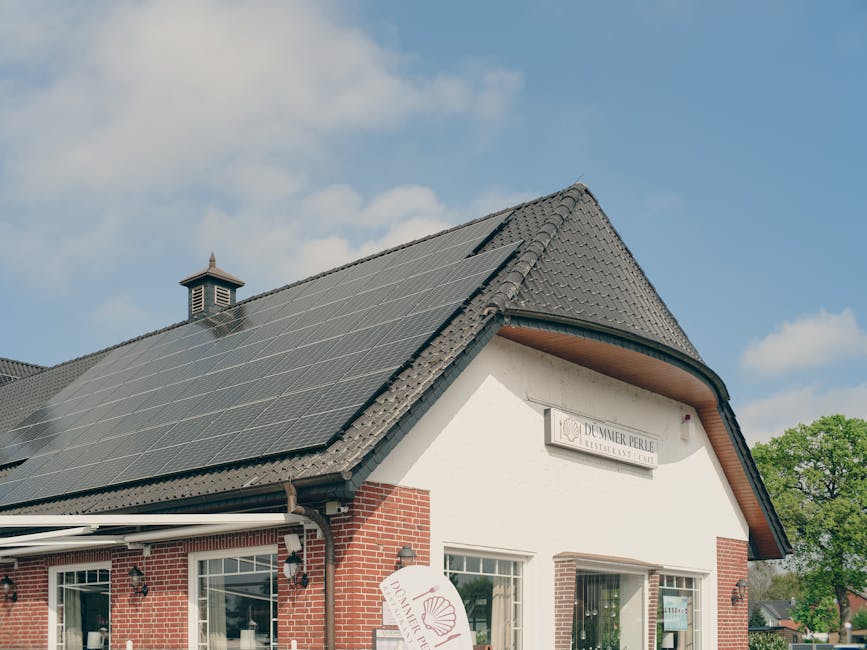
Building-Integrated Photovoltaics (BIPV) are solar cells embedded directly into building materials like roofs, walls, windows, and facades. Unlike traditional solar panels mounted on top of structures, BIPV serves dual purposes: generating electricity while functioning as the building’s outer envelope, offering aesthetic advantages and space efficiency for residential and commercial properties.
What is Building-Integrated Photovoltaics (BIPV)?
Building-Integrated Photovoltaics represent a revolutionary approach to solar energy generation that fundamentally changes how we think about home construction and energy production. Rather than treating solar as an add-on system, BIPV technology weaves energy generation directly into your building materials.
The concept is elegant: your roofing material, wall cladding, or window glass simultaneously protects your home and converts sunlight into electricity. This dual functionality eliminates the “bolt-on” appearance of traditional rooftop solar arrays while maintaining the same photovoltaic benefits.
BIPV systems work through crystalline silicon cells, thin-film technology, or perovskite materials integrated into building envelopes. When sunlight strikes these surfaces, electrons are displaced, creating electrical current that flows to your inverter and home’s electrical system. According to the U.S. Department of Energy’s Solar Energy Technologies Office, BIPV installations are gaining momentum as manufacturing costs decrease and efficiency ratings improve.
The aesthetic solar solutions category has exploded in recent years, with architects and homeowners recognizing that energy generation doesn’t require compromising on curb appeal. Solar roof panels using BIPV technology now come in multiple colors and finishes, while integrated solar walls can blend seamlessly with contemporary design.
BIPV Solar Roofs: Types and Benefits
BIPV solar roofs represent the most mature application of building-integrated photovoltaic technology. These aren’t traditional panels—they’re structural components that replace conventional roofing materials entirely.
Types of BIPV Solar Roof Panels:
- Monocrystalline BIPV Tiles: High-efficiency cells (18-22% efficiency) embedded in interlocking tiles that replace standard asphalt or clay roofing
- Polycrystalline BIPV Shingles: Lower efficiency (15-17%) but more affordable option that mimics traditional roofing aesthetics
- Thin-Film BIPV Coatings: Flexible, lightweight technology that can be applied to existing roof structures with lower efficiency rates (10-13%)
- Transparent BIPV Skylights: Semi-transparent solar materials allowing light penetration while generating electricity
Key Benefits of BIPV Solar Roofs:
Beyond generating electricity, solar roof panels offer significant advantages. They reduce cooling costs by blocking direct solar radiation—some studies show 5-10% annual energy savings from thermal properties alone. They provide immediate weather protection, eliminating installation complexity since you’re not mounting systems on top of existing structures. For homeowners concerned about aesthetics, BIPV roofs come in slate gray, black, and even bronze finishes that complement most architectural styles.
The space efficiency advantage cannot be overstated. Rather than occupying valuable roof real estate above your home, BIPV roofs become your roof. This matters significantly for smaller homes or properties with limited south-facing exposure.
BIPV Solar Walls: Installation and Applications
Integrated solar walls extend BIPV technology beyond roofing, transforming vertical building surfaces into power-generating assets. This approach is particularly valuable for commercial buildings with large, south-facing facades and residential properties where roof space is limited.
Installation Considerations:
BIPV solar walls require different mounting strategies than roofs. Vertical surfaces experience less direct sunlight (especially in northern climates), necessitating careful orientation analysis. Professional installers assess building shade patterns, neighboring structures, and seasonal sun angles to determine optimal wall selection.
Unlike traditional panels that bolt onto exterior walls, integrated solar walls become structural cladding. This means installation occurs during renovation or new construction phases—retrofitting existing facades presents structural and aesthetic challenges.
Residential and Commercial Applications:
East and west-facing walls can capture morning and evening sun, supplementing roof-mounted systems. Commercial buildings benefit substantially from BIPV walls, as larger surface areas compensate for less-optimal angles. A 5,000 square-foot south-facing office building wall could integrate 50-100 kW of solar capacity, powering significant facility loads.
For residential properties, BIPV walls work best as accents. A two-story south-facing wall section might contribute 5-8 kW to your system, meaningfully reducing grid dependence when combined with roof-integrated panels.
BIPV Cost vs Traditional Solar Panels
How much more expensive are BIPV solar systems compared to traditional solar panels?
This is the critical question affecting widespread BIPV adoption. Currently, BIPV systems cost 20-40% more per watt than conventional rooftop solar installations. While a standard 6 kW solar panel system runs $12,000-$15,000 after incentives, an equivalent BIPV roof installation might cost $15,000-$21,000.
However, this pricing comparison is incomplete. BIPV systems eliminate your roofing costs. Standard asphalt roofing costs $8,000-$15,000 for most homes. When you subtract replacement roofing expenses, the incremental BIPV premium shrinks to 5-15%—a much more compelling value proposition.
Manufacturing economies of scale continue improving BIPV economics. As adoption increases through 2026, costs are projected to decline 15-20% annually, approaching price parity with traditional solar within 3-5 years.
How Much Can BIPV Save You?
Your BIPV savings depend on system size, local electricity rates, and solar resource availability. The 25-year financial returns remain strong despite higher upfront costs.
For a typical home in a moderate solar resource area ($0.12-$0.15/kWh utility rate), an 8 kW BIPV roof system generates approximately $1,400-$1,800 in annual electricity value. Over 25 years, that’s $35,000-$45,000 in electricity production value. With federal tax credits covering 30% of system costs and potential state incentives, payback periods typically range from 7-12 years—comparable to traditional solar despite higher initial investment.
The real advantage emerges when you factor in avoided roofing replacement costs and aesthetic value. Homes with BIPV systems report higher perceived value and faster sales compared to those with bolt-on solar panels, according to real estate market analyses.
How to Use the Solar Savings Calculator
Understanding your specific financial scenario requires accurate local data. Our solar savings calculator incorporates your utility rates, local incentives, roof characteristics, and system design to project realistic payback periods and 25-year returns.
For BIPV-specific analysis, you can compare scenarios side-by-side using our ROI calculator, which accounts for structural roofing replacement costs and alternative financing options.
What is the lifespan and efficiency rating of building-integrated photovoltaic systems?
Most BIPV systems carry 25-30 year performance warranties, with typical degradation of 0.5-0.7% annually. This means your system produces approximately 82-85% of original capacity after 25 years—matching conventional solar longevity.
Efficiency ratings vary by technology: monocr
- Solar Window Film and BIPV Window Kits — Directly relevant to BIPV window solutions discussed in the post; allows homeowners to explore transparent solar technology for windows
- Home Energy Monitoring System — Essential for tracking BIPV system performance and optimizing electricity generation from integrated solar solutions
- Solar Roof Shingles and Tiles — Core BIPV product category for roof-integrated solutions; matches the post’s focus on solar cells embedded in roofing materials