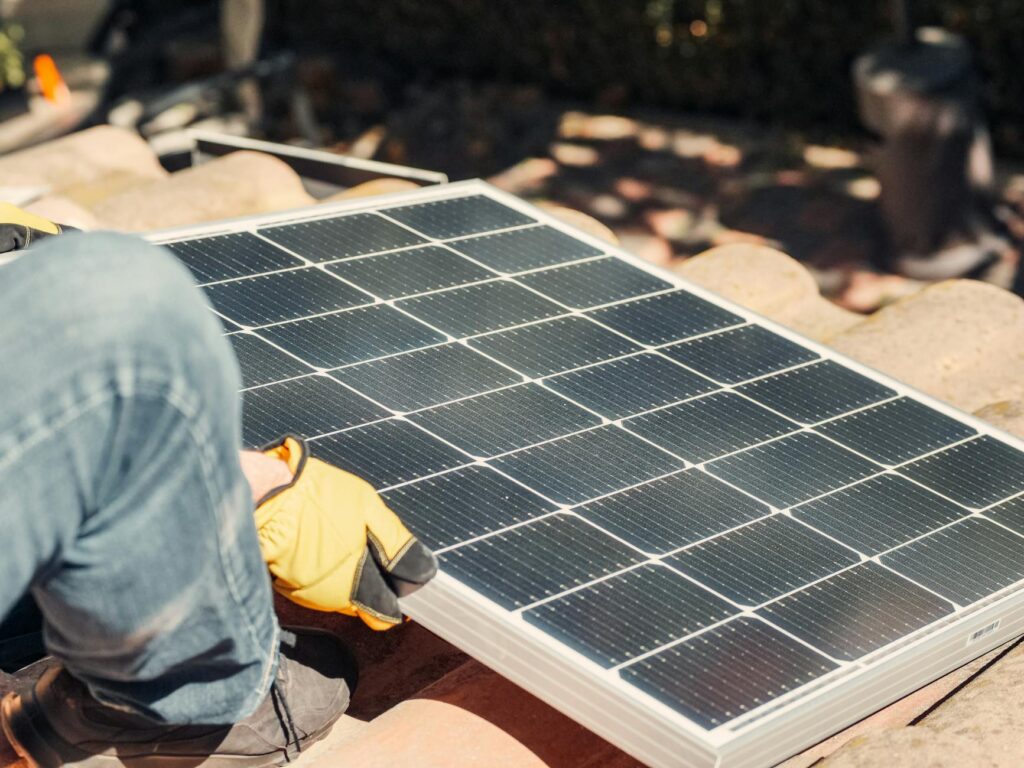
Silicon and thin-film solar panels represent two distinct approaches to converting sunlight into electricity, each with unique advantages and limitations. Understanding the key differences between these technologies helps you make an informed decision about which option best suits your home’s energy needs and budget. This guide breaks down the essential characteristics that set them apart.
Efficiency and Performance Ratings
Silicon solar panels, particularly monocrystalline and polycrystalline varieties, dominate the residential market because they deliver superior efficiency ratings. Most silicon panels achieve 15-22% efficiency, meaning they convert 15-22% of available sunlight into usable electricity. This high efficiency translates directly to more power generation in limited roof space.
Thin-film panels operate at lower efficiency levels, typically ranging from 7-13%. This lower conversion rate means you need significantly more panels to generate the same amount of electricity as silicon-based systems. However, thin-film technology continues to improve, and newer cadmium telluride and CIGS (copper indium gallium selenide) panels show promise for enhanced performance.
Performance degradation over time also differs between these technologies. Silicon panels typically degrade at 0.5-0.8% per year, while thin-film panels may experience slightly higher degradation rates of 0.8-1% annually. This distinction becomes meaningful over the 25-30 year lifespan of a solar installation.
Installation Costs and Space Requirements
The lower upfront cost of thin-film panels attracts budget-conscious homeowners. Per-watt pricing for thin-film technology is generally 10-15% cheaper than silicon alternatives. However, the complete system cost tells a different story. Since thin-film panels require nearly double the number of units to match silicon’s output, your total installation cost—including labor, wiring, and equipment—often exceeds what you’d pay for a silicon system.
Space represents another critical consideration. If your roof has limited square footage, silicon panels are the superior choice. Their higher efficiency means you need fewer panels to meet your energy goals. Conversely, if you have abundant roof space or a ground-mounted system, thin-film’s lower cost-per-panel might offset the space inefficiency.
Installation complexity is comparable between technologies. Both require proper mounting hardware, electrical connections, and inverter equipment. Labor costs remain relatively consistent regardless of panel type, making the total system cost the deciding factor for most homeowners.
Climate Performance and Durability
Silicon panels demonstrate excellent performance across diverse climates and consistently generate reliable power in various weather conditions. They handle extreme temperatures well, though efficiency slightly decreases in very hot climates. Snow and debris removal is straightforward, and the rigid structure resists wind damage effectively.
Thin-film panels possess a unique advantage in hot climates and high-temperature environments. These panels maintain better efficiency at elevated temperatures compared to silicon counterparts, losing less performance per degree of temperature increase. Additionally, thin-film technology performs adequately in low-light conditions and cloudy weather, making it suitable for regions with frequent cloud cover.
Durability and longevity favor silicon panels in most scenarios. The crystalline structure remains stable over decades, and manufacturers typically offer 25-year performance warranties. Thin-film panels, while durable, have a shorter track record in residential applications. Some thin-film manufacturers offer warranties comparable to silicon panels, but long-term field data is less extensive.
How to Use the Calculator
Determining which panel type works best for your specific situation requires understanding your roof’s solar potential and your household’s energy consumption. Use our solar panel cost calculator to input your location, roof specifications, and annual energy usage. The calculator instantly shows you how many panels you’d need for each technology type, the total system cost, and long-term savings projections. This personalized analysis removes guesswork and provides concrete numbers to guide your investment decision.
Frequently Asked Questions
Which solar panel type is best for residential homes?
Silicon solar panels remain the best choice for most residential installations due to their superior efficiency, proven durability, and widespread availability. They deliver maximum power generation from limited roof space and come backed by extensive warranties and established support networks. Thin-film panels may be worth considering if you have abundant roof space, operate in a very hot climate, or prioritize lowest upfront component costs over system efficiency.
Can thin-film panels work in cold or cloudy climates?
Yes, thin-film panels perform adequately in cold and cloudy climates. While they won’t match silicon’s efficiency levels, their superior low-light performance means they generate electricity even when skies are overcast. Cold temperatures actually slightly improve thin-film efficiency compared to silicon, though both technologies function in cold weather. If you live in a consistently cloudy region, either panel type will work, but silicon’s higher efficiency maximizes your power output despite the reduced sunlight availability.
How much space do I need for each panel type?
A typical residential rooftop has 1,500-2,500 square feet of usable solar space. For a 10 kW system using silicon panels (20% efficiency), you’d need approximately 500-600 square feet. The same 10 kW system using thin-film panels (10% efficiency) would require 900-1,200 square feet. Most homes can accommodate silicon panels without difficulty. Thin-film becomes practical only if you have significantly more roof space or are planning a ground-mounted array on your property.